Aviator's Certificates 71 to 80
71 Charles Rumney Samson
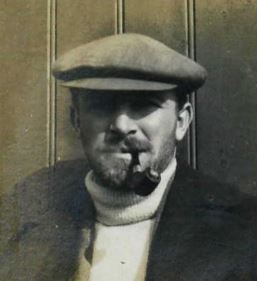 Charles Rumney Samson was born on 8 July 1883 in Crumpsall, Manchester, the son of Charles Leopold Samson and Margaret Alice Samson (née Rumney). Educated at Hemel-Hempstead and Greenwich, Samson enrolled in the Royal Navy and entered HMS Britannia as a cadet on 15 September 1897, following which he was posted to HMS Revenge for duty in the Mediterranean on 15 January 1899, being commissioned as a midshipman in the Royal Navy on 15 April 1899. He was promoted Sub-Lieutenant on 15 May 1902 and attended the Royal Navy College from 2 September.
Samson served aboard HMS Pomone in the Persian Gulf and Somaliland from 21 May 1903. He was promoted to Lieutenant on 30 September 1904 while serving on Training Ship HMS Northampton then served on Training Ship HMS Hawke from 15 November. In June 1906 he was appointed Officer Commanding of Torpedo Boat No 99, then No 81 and in February 1908 he was posted to the battleship HMS Commonwealth. The following year he was appointed first Lieutenant on the cruiser HMS Philomel serving in the Persian Gulf from 27 July, suppressing gun runners in the Persian Gulf and on one occasion captured 20,000 rounds of ammunition in a vessel Samson intercepted in the cruisers pinnace. Unfortunately he was invalided back to England on 14 May 1910, suffering with Malaria and Sunstroke. Following 3 months aboard HMS Victory, from 6 September 1910 he served in the Home Fleet aboard the scout cruiser HMS Foresight, again serving as the ship's First Lieutenant.
In 1911 Samson was selected as one of the first four Royal Navy officers to receive pilot training, Lieutenants Gerrard, Gregory and Longmore being the others. The four officers were briefed, confidentially, by Admiral Drury that they were expected to become instructors. On 7 March 1911 he was sent to the shore establishment HMS Wildfire (Sheerness) for a course of instruction in aviation. Trained by George Bertram Cockburn, he gained his RAeC Aviator's Certificate on 25 April, flying a Short Biplane at Frank McClean's Eastchurch flying ground. The first course lasted six months, much longer than the six weeks usually allowed at the time to obtain a pilots certificate. All four were given technical instruction at Short Brothers aircraft factory and at various French firms, most notably the Gnome aero-engine works. They also attended the French Military Aviation Trials at Reims before their course formally ended in September 1911, by which time they were considered to be expert.
On 21 September 1911 Samson was posted to HMS Actaeon for aviation duties. Actaeon was the depot ship for torpedo training, based at Sheerness, but she was also the pay and administration base for the Naval Flying School, which had just been established at Eastchurch. In November 1911 he was selected to serve on a Technical Sub-Committee of the Imperial Defence Committee dealing with Aerial Navigation and in February 1912 selected as the Naval Member on the Advisory Committee for Aeronautics, a position he held until April 1914. Also in 1912 he was appointed to the Royal Aero Club Accidents Committee.
Promoted to Acting Commander on 1 January 1912, Samson took part in several early naval aviation experiments, including the development of navigation lights and bomb sights. He designed and got leave to build in Chatham Dockyard a platform with a double trackway for starting aeroplanes from the decks of ships. He became the first British pilot to take off from a ship, on 10 January 1912, flying a Short-Sommer Pusher Biplane S.38 (Originally Naval Biplane No. 2, then B2, then T2 and finally s/n 2) from a ramp mounted on the foredeck of the battleship HMS Africa, which was at anchor in the river Medway. On 9 May 1912 he became the first pilot to take off from a moving ship, using the same ramp and aircraft, now fitted to the battleship HMS Hibernia during the 1912 Naval Review in Weymouth Bay.
On 1 April 1912 Samson was appointed Officer Commanding, Naval Flying School, Eastchurch, and on 30 September was promoted to Lt. Commander. When the Royal Flying Corps was formed later that month Samson took command of its Naval Wing, and led the development of aerial wireless communications, bomb and torpedo-dropping, navigational techniques, and night flying. On 8 January 1914 he attended a meeting held at the Admiralty chaired by the Fourth Sea Lord, Rear Admiral Sir Cecil Lambert. There it was concluded that there was a need to define the role of naval aviation more precisely and the meeting was notable for the fact that the operational organisation was referred to for the first time as the Naval Air Service' rather than the Naval Wing. When the Royal Navy separated the Naval Wing from the Royal Flying Corps, as the Royal Naval Air Service, on 1 July 1914, Samson was appointed Wing Commander and Officer Commanding the Eastchurch (Mobile) Squadron on 27 August, which was renamed No 3 Squadron RNAS on 1 September 1914 and later No 3 Wing RNAS on 21 June 1915.
Following the outbreak of WWI, the Eastchurch (Mobile) Squadron, with Samson flying B.E.2a s/n 50, was posted to Immingham on 9 August to carry out patrol duties, then Skegness on the 11th before returning to Eastchurch on the 24th. The squadron then embarked for Ostend on 27 August and then to St. Pol by 1 September, at which point it was renamed No 3 Squadron, RNAS, and Squadron-Commander Richard Bell Davies took over command. Samson temporarily took command again on 8 October and carried out the first night bombing mission in history on 12 December 1914 in a Maurice Farman aircraft, s/n 1241. Meantime, on 23 October 1914, he had been appointed a Companion of the Distinguished Service Order (DSO).
From the earliest days of naval flying, motor cars formed an important element of an air organisations equipment and after arriving in France Samson expected to use them for the location of aircraft that had been forced to land by mechanical failure, the establishment of temporary airfields and the carriage of mechanics and spare parts wherever they were needed. However, the RNAS soon found that vehicles had tactical uses which complemented aircraft and that motor cars could often operate when aircraft could not. Samson saw the possibilities when he armed one vehicle with a Maxim gun and ambushed a German car near Cassel on 4 September 1914. He then had a shipbuilders in Dunkirk add boilerplate to his Rolls Royce and Mercedes vehicles. The new armoured car squadrons were soon used to great effect forming part of Naval mechanised raiding columns against the Germans. By November 1914 the Section had become the Royal Naval Armoured Car Division (RNACD).
On 11 March 1915 Samson was sent to the Dardanelles with No 3 Squadron RNAS, arriving at Tenedos on the 24th. The first operational sortie by No 3 Squadron was carried out on 28 March and aircraft subsequently flew reconnaissance sorties over the peninsula on every day that the changeable weather allowed. On 17 May 1915 Samson, with Flight Lieutenant R L G Marix as pilot, flew in a Breguet armed with a single 100 lb and fourteen 20 lb bombs attacked the port of Ak Bashi Liman. This was the first air strike against the port and it caused widespread panic among the dock workers and killed fifty-seven soldiers. Marix and Samson then carried out a detailed reconnaissance of the forces on the ground and passed the information to GHQ.
On 12 April 1916, Samson was given command of HMS Ben-my-Chree, a former Isle of Man passenger steamer which had been converted into a seaplane carrier. In May he was appointed Officer Commanding, East Indies and Egypt Seaplane Squadron, RNAS, comprising HMS Ben My Chree and HMS Raven. Based at Port Said, he patrolled the coasts of Palestine and Syria, sending his aircraft on reconnaissance missions and bombing Turkish positions. On 19 January 1917 he was awarded a bar to his DSO.
Returning to England, on 22 June 1917 Samson was appointed Staff Officer at the RNAS headquarters, located in Hotel Cecil, The Strand, London, and from 31 October 1917 until the end of the War, was in command of an aircraft group at Great Yarmouth responsible for anti-submarine and anti-Zeppelin operations over the North Sea.
Here Samson set about pioneering work modifying lighters from which a 2F. 1 Ship's Camel could be flown in order to intercept Zeppelins over the North Sea. Samson carried out the first trial take-off on 30 May, flying 2F. 1 Ship's Camel, s/n N6623, but the deck had been installed level with the lighters upper deck and at 30 knots the lighter had a pronounced bow-up attitude which meant that the aircraft had to climb a steep slope when it was released. This caused Samson to stall, ditch just ahead of the lighter and he was lucky to survive when it ran over him. However following modifications the idea proved highly successful and by the end of the war pilots under his command had shot down five Zeppelins. On 31 December 1917 he was promoted to Wing Captain RNAS.
On its formation on 1 April 1918, Samson received a temporary commission in the RAF with the rank of Lt.-Colonel. In October the anti-Zeppelin group became 73 Wing of the new No 4 Group based at the Seaplane Experimental Station, Felixstowe, as part of the Royal Air Force, and Samson became Commanding Officer of No 4 Group. Awarded the Air Force Cross (AFC) on 1 January 1919 and appointed Companion of The Most Distinguished Order of Saint Michael and Saint George (CMG) on 3 June, in August 1919 he gave up his naval commission upon receiving a permanent commission in the RAF with the rank of Wing Commander. Promoted to Group Captain on 5 August 1919, on 22 September was appointed Group Captain (Air)/Chief Staff Officer, HQ Coastal Area.
On 18 August 1921 Samson became Officer Commanding for RAF units in the Mediterranean (AOC from 1 Jan 1922) based at Malta and was appointed to be a Member of the Nominated Council for Malta on 7 December 1921. On 1 January 1922 he was promoted to Air Commodore and on 26 February 1924 given Command of 1 Group, Inland Area, at RAF Kenley, then Command of 6 (Fighter) Group, also at RAF Kenley, on 19 May. In June 1926 he became Chief Staff Officer of the RAF's Middle East Command, and remained with the Middle East Command until August 1927.
In 1926 and 1927, Samson led two record breaking flights, the first, a return flight from Cairo to Aden (16 - 29 September 1926) and the second from Cairo to Cape Town (30 March - 22 May 1927). The routes used by Samson and the facilities established on the journey would later be used to establish the civilian air routes of Imperial Airways and other airlines.
On 1 October 1928, Samson was Chief Staff Officer, HQ Fighting Area and from 1 November 1928 to 1 January 1929 was Acting AOC, Fighting Area.
On 28 March 1929 Samson was admitted to RAF Hospital, Uxbridge and placed on dangerously ill list. As a result he was placed on the retired list on account of ill health in 1929.
Air Commodore Charles Rumney Samson, CMG, DSO & Bar, AFC died of heart failure on 5 February 1931 at his home near Salisbury, Wiltshire.
72 Arthur Murray Longmore
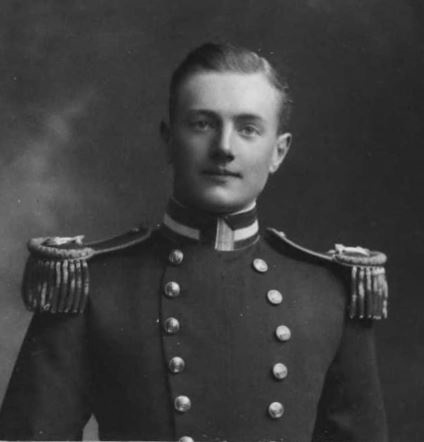 Arthur Murray Longmore was born on 8 October 1885 in Manly, New South Wales, the son of Charles Croker Longmore and Janet Longmore (née Murray). He was educated at Benges School, Hertford and Foster's Academy, Stubbington before entering Dartmouth Naval College. He entered the Royal Navy as a Cadet aboard training ship HMS Britannia from 15 May 1900 to 14 September 1901, and then transferred to HMS Juno, stationed in China, from 15 September 1901. He was promoted to Midshipman on 30 October 1901. Following various postings in China, he returned home to Chatham on 30 November 1904.
Promoted to Acting Sub-Lieutenant on 30 December 1904, Longmore undertook training in Torpedo Craft from 15 March 1905 and was placed in command of TB.74 on 29 September 1906. Promoted to Lieutenant on 30 December 1906, he was posted 2nd in Command of cruiser HMS Good Hope from 16 July 1907 until 4 April 1909, before being posted to shore establishment HMS Actaeon for Torpedo Boat duties (see Samson for details of HMS Actaeon); he was Officer Commanding HM Torpedo Boats 76, 111 and 24 during 1910-11.
Having developed an interest in flying, Longmore was selected as one of the first four Royal Navy officers to receive pilot training, Lieutenants Gerrard, Gregory and Samson being the others. The four officers were briefed, confidentially, by Admiral Drury that they were expected to become instructors. On 7 March 1911 he was sent to the shore establishment HMS Wildfire (Sheerness) for a course of instruction in aviation. Trained by George Bertram Cockburn, he gained his RAeC Aviator's Certificate on 25 April, flying a Short Biplane at Frank McClean's Eastchurch flying ground. The first course lasted six months, much longer than the six weeks usually allowed at the time to obtain a pilots certicate. All four were given technical instruction at Short Brothers aircraft factory and at various French firms, most notably the Gnome aero-engine works. They also attended the French Military Aviation Trials at Reims before their course formally ended in September 1911, by which time they were considered to be expert.
Longmore was appointed to HMS Actaeon for aviation duties on 21 September 1911 and in November he became the first man to fly an aircraft from land onto water in England, a feat he carried out in a Short-Sommer Pusher Biplane S.38 (Originally Naval Biplane No. 2, then B2, then T2 and finally s/n 2) in Sheerness Harbour. On 22 March 1912 he was sent to Monaco, along with Captain G Paine, to observe the Hydro-Aeroplane meeting.
Promoted to Squadron Commander (RFC Naval Wing) on 1 April 1912, six weeks later Longmore was appointed one of the first four instructors at newly formed Central Flying School, Upavon, the others being Captains E L Gerrard, J D B Fulton and P W L Broke-Smith. He commanded 'B' Flight, equipped with Maurice Farmans and B.E.2s. One of his first tasks at the CFS was to teach Captain Paine, the school's first Commandant, to fly in order that he could take up his new post. He also taught Major Hugh Trenchard to be a military pilot after he had gained his RAeC Certificate.
In September 1912 Longmore took part in the Army autumn manoeuvres with Major Trenchard as his observer, flying a number of different aircraft types that supported the Northern Army. They operated from a field at Thetford, near Peterborough.
In addition to air stations intended to be permanent, several temporary ones had been established for the 1913 manoeuvres. Among these were Cromarty on the south shore of Cromarty Firth. In May 1913 it had existed only in name and Longmore was sent north to find a suitable site from which seaplanes could be operated. He found an area of flat ground on which fishermen dried their nets near the Coastguard station. The base moved to a permanent site at Fort George, just further south, on October 1913, with Longmore as Officer Commanding.
In November 1913 Longmore was tasked to prepare a draft scheme for recruiting personnel into the expanding naval air organisation and for training them. On 8 January 1914 he attended a meeting held at the Admiralty, chaired by the Fourth Sea Lord, Rear Admiral Sir Cecil Lambert. There it was concluded that there was a need to define the role of naval aviation more precisely and the meeting was notable for the fact that the operational organisation was referred to for the first time as the 'Naval Air Service' rather than the Naval Wing.
Longmore was appointed Officer Commanding the experimental seaplane establishment at Calshot on 15 January 1914, where he successfully launched the first torpedo from an aircraft whilst flying Short Type 81, s/n 121, on 28 July 1914. He was promoted to Acting Lt-Commander (RN) on 24 June 1914 and Squadron Commander (RNAS) on 1 July 1914. Such was the importance placed on anti-submarine operations that Churchill flew a trial sortie with Longmore to discover for himself the range at which a submarine could be detected. He signaled RNAS Calshot to say that he wanted a seaplane alongside the Admiralty yacht Enchantress, moored in Portsmouth Harbour, at 10 a.m. the next day and a Maurice Farman was duly flown across, landing with some difficulty in the crowded harbour. They made a timed rendezvous with a submarine off the Nab Light Vessel and the boat proceeded to dive and operate at pre-briefed depths for the First Lord to judge for himself the difficulty of detection.
Following the outbreak of WWI, Longmore was posted at Officer Commanding 3 Squadron (RNAS) at Dunkirk on 1 October 1914, until replaced by Samson on 8 October. He then took command of 1 Squadron (RNAS), which had been reformed at Grange Field, Gosport, on 15 October. After time on Channel defence operating out of Dover, the squadron moved to St. Pol, France, on 22 May 1915 to relieve 3 Squadron. Longmore was promoted to Lt-Commander (RN) on 30 December 1914, Wing Commander (RNAS) on the 31st and to Acting Commander (RN) on 5 January 1915.
It was not long before the fact that the enemy was assembling submarines at Antwerp became known to the Admiralty and Longmore was ordered to bomb the dockyards. Bombing attacks were made on 24 March 1915. Five pilots from 1 Squadron (not including Longmore) started off in the morning attack: one with engine trouble came down in Holland, two were driven back by the weather conditions, one of them having dropped his bombs on Ostend, and the remaining two made a successful attack on the dockyard.
An unfortunate incident occurred when allegations of attempted looting at Ypres against another officer were made. The following Court of Enquiry on 6 January 1916 found that allegations were unfounded but that Longmore had failed in his duties as Commanding Officer of a Naval Wing and had lent himself to a system of plotting and intrigue: displeasure was expressed by Their Lordships and he was ordered to be sent to sea in his substantive rank of Lt-Commander. Consequently on 16 January he was posted to the battlecruiser HMS Tiger. As a result he was directly involved in the Battle of Jutland, during which he acted as air adviser to the Flag Officer, Battle Cruisers.
Back ashore in June 1916, and reinstated with his rank of Wing Commander (RNAS), Longmore received a series of postings:
Officer Commanding, Killingholme Air Station, in general charge of Air Stations under Admiralty Command on the East Coast (Redcar, Scarborough and South Shields) from 15 June 1916.
Officer Commanding, Eastchurch Air Station from 7 September 1916.
Assistant Superintendent for Design, Air Department from 3 February 1917.
From 3 December 1917 he was appointed to HMS President for 'Special Service'. At RNAS Hendon, Longmore and his passenger, PO Lee, were both injured when their D.H.4, s/n B9483, collided with a searchlight. Appointed Wing Captain (RNAS) on 31 December 1917, he was posted as Senior Air Service Officer, Mediterranean, from 12 February 1918. On its formation on 1 April 1918, Longmore received a temporary commission in the RAF with the rank of Lt.-Colonel (temporary Colonel whilst the senior Royal Air Force Officer on the staff of the Commander-in-Chief, Mediterranean). Later that month he was appointed Officer Commanding, Adriatic/Malta Group.
Longmore was awarded a permanent commission in the RAF on 1 August 1919 as a Lt.-Colonel (Group Captain from 5 August when the RAF introduced its own ranking system). He was removed from the Navy Lists on 22 January 1920.
Mentioned in Despatches on 1 January 1919, Longmore received several awards for his services during WWI:
| 21 June 1915 : | appointed Officier de l'Ordre de la Couronne (Officer of the Order of the Crown), conferred by His Majesty the King of the Belgians. |
| April 1916 : | awarded the Croix de Guerre, conferred by the President of the French Republic. |
| 28 April 1916 : | appointed Chevalier de la Légion d'honneur (Knight of the Legion of Honour), conferred by the President of the French Republic. |
| 1 January 1919 : | appointed a Companion of the Distinguished Service Order (DSO). |
| 8 February 1919 : | appointed Ufficiale dell'Ordine dei Santi Maurizio e Lazzaro (Officer of the Order of Saints Maurice and Lazarus), conferred by the Government of Italy. |
| 5 April 1919 : | awarded the Croce di Guerra (War Cross) for services rendered in the Mediterranean Area, conferred by the Government of Italy. |
Longmore was appointed Officer Commanding, Aeronautical Commission of Control (Bulgaria) on 5 February 1920 and then Air Officer Commanding No. 3 Group from 23 November. He was then Supernumerary, RAF Depot, from 15 September 1921 before attending the Army Staff College, Camberley, on 23 January 1922.
Appointed to the Air Staff, HQ Iraq Command on 23 February 1923, Longmore was promoted to Air Commodore on 1 July 1924 and appointed Air Officer Commanding No. 7 Group, Andover, on 26 November 1924. Appointed Companion of The Most Honourable Order of the Bath (CB) on 1 January 1925 he was appointed Director of Equipment at the Air Ministry from 1 April 1925 and Chief Staff Officer at Headquarters Inland Area at Bentley Priory on 15 March 1929.
Again Supernumerary, RAF Depot, from 15 October 1929, Longmore was appointed Commandant of the Royal Air Force College Cranwell from 16 December 1929. Promoted to Air Vice-Marshall on 1 January 1930, he returned to Headquarters Inland Area at Bentley Priory as Air Officer Commanding from 1 February 1933. He then moved to Lee-on-Solent as Air Officer Commanding Coastal Area (which was renamed RAF Coastal Command under his leadership) from 1 October 1934.
Promoted to Air Marshall on 1 January 1935, he was appointed Knight Commander of The Most Honourable Order of the Bath (KCB) on 3 June 1935 and went on to be Commandant of the Imperial Defence College from 1 September 1936 to December 1938. He was appointed Deputy Lieutenant of Lincolnshire on 24 March 1938.
During 1939 Longmore was a member of British Air Mission to Australia and New Zealand. He was placed in charge of RAF Training Command from 1 July 1939 and promoted to Temporary Air Chief Marshal on 1 November.
On 2 April 1940, Longmore was appointed Air Officer Commanding in the Middle East. There he was involved in the early campaigns against the Italians. Amongst these was the Italian and German assault on Greece. Here he took the unilateral decision to send RAF units from the Middle East in order to support the Greeks, a decision, which received the full backing and support of Winston Churchill. However, when the expected reinforcements from Britain, to replace those units sent to Greece, did not arrive he found his command becoming seriously under equipped. He soon started making complaints about this lack of reinforcements, which failed to improve dramatically, even after the opening of the 'Takoradi Route'. This soon made him an 'enemy' of Churchill with a consequent loss of confidence. Recalled to London in May 1941 to discuss the supply problem, he was actually relieved of his command. Appointed Knight Grand Cross of The Most Honourable Order of the Bath (GCB) on 4 March 1941, his last role before his formal retirement in 1942 was as Inspector-General of the RAF.
In retirement he stood for Parliament as Conservative candidate for Grantham, but was defeated by the Independent candidate. He then joined a voluntary organisation, 'Yachtsmen's Emergency Service' and was involved in providing transport for the invasion fleet building up off the South coast in 1944. On 1 August 1943 he relinquished rank of Air Chief Marshal to be re-employed as Air Vice-Marshal, Staff, Post-Hostilities Planning then on 1 June 1944 reverted to Retired List as Air Marshal retaining the rank of Air Chief Marshal.
Longmore was appointed to the Royal Order of George I (With Swords), Grand Cross, conferred by His Majesty the King of the Hellenes on 29 September 1944, in recognition of valuable services rendered in connection with the war.
He was once again appointed Deputy Lieutenant of Lincolnshire on 16 September 1945. From 1954 to 1957 he was Vice-Chairman of the Commonwealth War Graves Commission and he continued to sail as a member of the Royal Yacht Squadron.
Air Chief Marshal Sir Arthur Murray Longmore, GCB, DSO, DL died on 10 December 1970 in Sunningdale, Berkshire.
73 Wilfred Parke
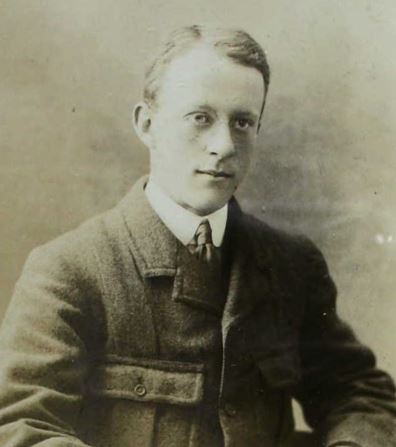 Wilfred Parke was born on 1 April 1889 in Uplyme, Devon, the son of Alfred Watlington Parke and Hilda Winifred Parke (née Fort). He enrolled in the Royal Navy on 15 May 1904, became a midshipman in September 1905, and was promoted to Sub-Lieutenant in 1908, then Lieutenant in 1910. He gained his RAeC Aviator's Certificate on 25 April 1911, flying a Bristol Biplane at Brooklands on his fourth flight. When Howard Pixton left A V Roe in June 1911, Parke took over as instructor and test pilot which, doing this when not engaged on naval duties. As a serving officer, this was unpaid. In October 1911 he was also taken on as a demonstrator and instructor by the Grahame-White flying school at Hendon.
In May 1912 he was posted to HMS Actaeon (see Samson for details of HMS Actaeon), as an officer of the Naval Wing of the RFC, but still maintained his role with A V Roe. In March 1912 he made the first flight of the Avro Type 500. On 1 May he made the first flight of the Type F, the world's aircraft with an enclosed cabin. In August he was the pilot of the Avro G cabin biplane which had been entered in the British Military Aeroplane Competition taking place at Larkhill Aerodrome on Salisbury Plain. On the morning of August 25 he had carried out a three-hour endurance trial, accompanied by Lieutenant Le Breton, RFC, and was approaching the aerodrome in order to land. The aircraft entered a spin. Parke attempted to recover by increasing engine speed, pulling back on the stick, and turning into the spin, with no effect. The aircraft descended 450 feet. In an effort to neutralize the forces pinning him against the right side of the cockpit, he applied full right rudder, and the aircraft levelled out fifty feet above the ground. With the aircraft now under control, Parke climbed, made another approach, and landed safely. This method became known as the "Parke's technique," also known as the "Parke Dive".
Lieutenant Wilfred Parke was killed a few months later on 15 December 1912 when the Handley Page Type F monoplane in which he was flying from Hendon to Oxford crashed at Wembley, also killing his passenger Alfred Arkell Hardwick (b. 14 January 1878), the works manager of Handley Page.
74 Francis Conway Jenkins
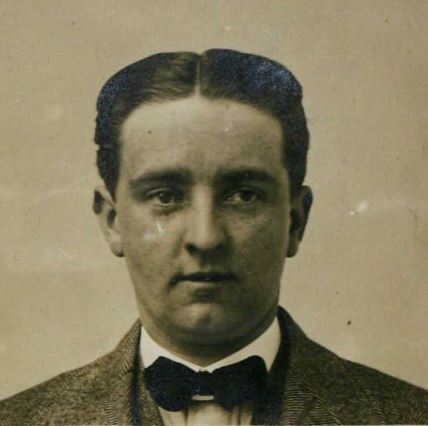 Francis Conway Jenkins was born on 25 January 1888 in Forest Gate, Essex, the son of Edmund Ernest Jenkins and Helen Jenkins (née Conway). Jenkins was involved in the motor industry from 1905 and raced at Brooklands. He learned to fly at the A V Roe School at Brooklands and gained his RAeC Aviator's Certificate on 2 May 1911, flying a Roe Biplane.
His early flying seemed filled with mishaps. Still rather inexperienced but full of confidence, he started taking paying passengers but on one occasion, climbing much too steeply, tried to turn and stalled. The machine came fluttering back to earth and finished up on its nose. He then took part in the Round Britain Race organized by Daily Mail in August 1911, unfortunately crashing his Blackburn Monoplane. Later that year he crashed the Roe 'Pixie Plane' at Brooklands.
Jenkins was enlisted in the RFC Special Reserve on 29 August 1914 as a 2nd Lieutenant (on probation), graded as Flying Officer, but was immediately promoted to be Officer in Charge of Mechanical Transport and graded as Flight Commander. On 20 September he was promoted to Captain. On 20 February 1916 he was re-graded as Squadron Commander, with the temporary rank of Major, and on 27 March became a temporary Deputy Assistant Director at the War Office, relinquishing his temporary Major rank. On 14 December, he was appointed temporary Assistant Director, with the temporary rank of Lieutenant-Colonel and on 31 August 1917 was appointed to Director with the temporary rank of Brigadier-General. As such, he was in command of the RFC's Acceptance Parks.
On 18 February 1918 Jenkins transferred to the nascent Royal Air Force as Director of Parks and Depots with the rank of Lieutenant-Colonel (act. Brigadier-General).
He resigned his commission on 15 February 1919 and became a director of The British Motor Trading Corporation (founded 1919) and Chairman of Chrysler Motors and Dodge Brothers (Britain).
Brigadier-General Francis Conway Jenkins, CBE died 23 February 1933 in Cookham, Berkshire, following an operation.
75 Reginald Gregory
 Reginald Gregory was born on 6 April 1883 in Westwood Drummond, near Inverness, the son of Alexander Allan Gregory and Harriet Margaret Gregory (née MacDonald). He enrolled in the Royal Navy and entered HMS Britannia as a cadet on 15 May 1898, following which he was posted to HMS Repulse on 5 September 1899. Promoted to Midshipman on 15 January 1900, he was posted to HMS Empress of India on 15 September and HMS Caesar from 14 September 1901, both for service in the Mediterranean.
Returning to England on 3 January 1903, Gregory was promoted to Sub-Lieutenant on 15 January and then attended college for the rest of that year, before being posted to Chatham for duty on destroyers on 22 December 1903. He was posted to HMS Mercury for a Navigation Course on 25 April 1904 then to HMS Swiftsure on 24 October as Assistant Navigator. Promoted to Lieutenant on 30 June 1905, he served as Navigator aboard HMS Barham from 19 August 1905 to 25 February 1908. However on 12 September 1908 he was Court Marshalled and found guilty of not correcting and updating charts and sailing instructions aboard HMS Barham and relieved of duty.
Following a couple of temporary postings, Gregory returned to Navigational duties aboard HMS Halcyon on 1 April 1909 and served as such on several vessels up to 28 February 1911.
In 1911 Gregory was selected as one of the first four Royal Navy officers to receive pilot training, Lieutenants Gerrard, Longmore and Samson being the others. The four officers were briefed, confidentially, by Admiral Drury that they were expected to become instructors. On 7 March 1911 he was sent to the shore establishment HMS Wildfire (Sheerness) for a course of instruction in aviation. Trained by George Bertram Cockburn, he gained his RAeC Aviator's Certificate on 2 May, flying a Short Biplane at Frank McClean's Eastchurch flying ground. The first course lasted six months, much longer than the six weeks usually allowed at the time to obtain a pilots certificate. All four were given technical instruction at Short Brothers aircraft factory and at various French firms, most notably the Gnome aero-engine works. They also attended the French Military Aviation Trials at Reims before their course formally ended in September 1911, by which time they were considered to be expert. In December 1911 he was selected to serve on a Technical Sub-Committee of the Imperial Defence Committee dealing with Aerial Navigation.
On 1 April 1912 he was appointed as Squadron Commander, Naval Flying School, Eastchurch. He was appointed in command of the Yarmouth Group of Air Stations on 15 April 1913 and was promoted to the rank of Lieutenant-Commander on 30 June.
On 8 January 1914 he attended a meeting held at the Admiralty chaired by the Fourth Sea Lord, Rear Admiral Sir Cecil Lambert. There it was concluded that there was a need to define the role of naval aviation more precisely and the meeting was notable for the fact that the operational organisation was referred to for the first time as the 'Naval Air Service' rather than the Naval Wing. With the formation of the RNAS on 1 July, 1914, Gregory transferred to that service with the rank of Squadron Commander.
On 24 April 1915 Gregory was promoted to the rank of Acting Commander and appointed to the RNAS Armoured Car Division, as deputy under Commander Oliver Locker Lampson. The Belgian Minister asked that the Armoured Car Division might remain in Belgium, and Gregory received approval for this on 9 September 1915. As a result, on 1 February 1916 Gregory was awarded the Insignia of Officer of the Order of Leopold in recognition of valuable services rendered by him.
The RNAS Armoured Car Division was next sent to Russia, arriving 1 January 1916, and the entire unit drove to the Caucasus, the majority of the force operating throughout the Caucasus down to the Turkish border. When the rainy season arrived in October, the force drove via the northern shores of the Black Sea into Romania. On 24 April 1917 Gregory requested to return home permanently on 24 April 1917, and returned from Russia, via Japan and America, on 8 September 1917. He was awarded the Order of St. Vladimir on 1 November by the Russian Government.
Apparently Gregory was not in good shape during his return. He was noted as appearing to suffer from shock and drinking heavily while in New York. Accordingly, he was ordered to see the Fifth Sea Lord, Rear Admiral Godfrey Paine, on 11 November, and was returned to the Establishment of the Royal Navy. He served as Acting Commander aboard the sloop HMS Mimosa from 22 November 1917 to 31 May 1918, then Acting Commander of the sloop HMS Veronica. He transferred to the Royal Navy Reserve on 26 September 1918 and was made Assistant to Captain of Dockyard and Assistant King's Harbour Master, Portsmouth, in May 1919. He was appointed to HMS Tamar, the Royal Navy's shore base in Hong Kong, on 11 October, 1921 where he was in charge of a chart and chronometer depot.
Reginald Gregory died in Hong Kong on 21 June, 1922 of organic heart disease.
76 Eugene Louis Gerrard
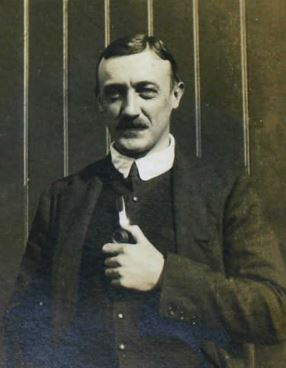 Eugene Louis Gerrard was born on 14 July 1881 in Dublin, Ireland, the son of Thomas Gerrard and Elizabeth Jane Gerrard (née Wardell). He was commissioned into the Royal Marine Light Infantry as a 2nd Lieutenant on 1 September 1900, promoted to Lieutenant on 1 January 1901. At college from 1 October 1900 to 30 June 1901, he served as a Marine Officer on various Royal Navy vessels between 1904 and 1910, including HMS Defiance (1904), HMS Spartiate (January 1905 to February 1906), HMS Prince of Wales (July 1906 to December 1908) and HMS Vindictive (April to September 1910). His last posting was aboard HMS Hermione from 28 September 1910 to 6 March 1911, while preparations were being made for use as a tender for the Royal Navy's first airship, although this project was eventually abandoned.
In 1911 Gerrard was selected as one of the first four Royal Navy officers to receive pilot training, Lieutenants Gregory, Longmore and Samson being the others. Lieutenant G V Wildman-Lushington, RMLI was originally the fourth member of the group, but before the course began, he was taken ill and he was replaced at short notice by Gerrard. The four officers were briefed, confidentially, by Admiral Drury that they were expected to become instructors. On 7 March 1911 he was sent to the shore establishment HMS Wildfire (Sheerness) for a course of instruction in aviation. Trained by George Bertram Cockburn, he gained his RAeC Aviator's Certificate on 2 May 1911, flying a Short Biplane at Frank McClean's Eastchurch flying ground, the first Royal Marines Officer to qualify as a pilot. The first course lasted six months, much longer than the six weeks usually allowed at the time to obtain a pilots certificate. All four were given technical instruction at Short Brothers aircraft factory and at various French firms, most notably the Gnome aero-engine works. They also attended the French Military Aviation Trials at Reims before their course formally ended in September 1911, by which time they were considered to be expert.
During training, on 16 August, accompanied by Lt Wildman-Lushington, he made a world record cross-country flight with passenger, flying Short 'Long Range' Pusher Biplane, s/n 1, for 4 hrs 13 minutes. On 1 September 1911, he was promoted to Captain in the RMLI and on 21 September attached to HMS Actaeon for Special Service (see Samson for details of HMS Actaeon).
On 1 April 1912 Gerrard was transferred to the newly formed Royal Flying Corps, graded as a Squadron Commander, with the temporary rank of Major in the RMLI. On 15 May he was appointed one of the first four instructors at newly formed Central Flying School, Upavon, the others being Longmore, J D B Fulton and P W L Broke-Smith. He commanded 'C' Flight, equipped with Henri Farman and Short Biplanes, but returned to the Establishment of RMLI on 20 November.
Appointed Brevet Major in the RMLI on 3 January 1914, Gerrard transferred to the Royal Naval Air Service on 1 July 1914 with the rank of Squadron Commander. He was appointed Officer Commanding Naval Flying School, Eastchurch on 31 August, and became Commanding Officer of No 1 Squadron RNAS when it formed at Wilrijk aerodrome, Antwerp, on 1 September.
Under the orders of Churchill, Gerrard was tasked with mounting the first long-distance bombing raid on Germany. This first raid on the Zeppelin sheds finally took place on 22 September 1914. It consisted of four aeroplanes: Gerrard, flying B.E.2a, s/n 50, and Flight Lieutenant R L G Marix, were both bound for Cologne, while Squadron Commander Spenser Grey, along with Flight Lieutenant Collet, had Düsseldorf as their target. Unfortunately only Collet found his target and even then his bomb failed to explode.
Following the disbandment of No 1 Squadron on 13 October 1914, Gerrard returned to England and was posted as Commanding Officer of No 2 Squadron RNAS at Eastchurch from its formation on 17 October 1914. Gerrard was appointed Wing Commander on 1 January 1915, and No 2 Squadron became No 2 Wing RNAS on 21 June. On 1 August 1915, No 2 Wing was sent to Dunkirk to replace No 1 Wing, where it was able to participate in the destruction of a Zeppelin on 9 August. Five German naval airships had carried out a raid on British east coast towns from their north German bases. One of them, L12, arrived over Westgate and Ramsgate in misty conditions and flew on to Dover where it dropped a few bombs but was hit by an anti-aircraft shell. It turned at once for Belgium but lost gas rapidly and came down in the sea a few miles short of the enemy-held coast. It was located and bombed by 2 Wing aircraft but the enemy managed to tow the wreck to a quayside at Ostend. Bombing attacks on the wreck continued and so the Germans gave up any attempt to salvage it and broke it up in situ. No 2 Wing spent only a short time at Dunkirk before being withdrawn on 15 August for service in the Dardanelles. It was replaced by No 1 Wing.
No 2 Wing, with Gerrard in Command, was posted to the Dardanelles between 23 September 1915 and 19 May 1916. Returning to England, Gerrard was posted as Officer Commanding Eastbourne Air Station from 22 May to 29 September 1916. Appointed a Companion of the Distinguished Service Order (DSO) on 22 June for his leadership in the Eastern Mediterranean, he was promoted to Wing Captain on 30 June.
On 3 April 1917 Gerrard was appointed Officer Commanding, South-West Group RNAS, Plymouth, and was promoted to Major in the RMLI on 22 June. He was promoted to temporary Lt.-Colonel in the RMLI on 6 June 1917 and on 22 February 1918 was appointed Chevalier, the Order of Leopold (With Swords), conferred by His Majesty the King of the Belgians.
On its formation on 1 April 1918, Gerrard received a temporary commission in the RAF with the rank of Colonel (Acting Brigadier General) and was appointed Group Commander, GOC, No 9 Group. On 1 January 1919 he was appointed Companion of The Most Distinguished Order of Saint Michael and Saint George (CMG) and on 1 August 1919 awarded permanent commission in the RAF as a Colonel (Group Captain when the RAF introduced its own ranking system the same day), terminating his commission in the RMLI.
On 2 June 1920 Gerrard was appointed Officer Commanding, Mediterranean Group and, after attending RN Staff College, Greenwich from 21 Aug 1921, was appointed Officer Commanding, No 1 Group on 27 February 1922. Promoted to Air Commodore on 1 January 1923, Gerrard was appointed AOC, Palestine Command on 24 February 1924 and AOC, HQ RAF Transjordan and Palestine on 8 February 1927. From 9 August 1927 he was AOC, No 1 Air Defence Group.
Gerrard was placed on the retired list at his own request on 15 November 1929.
In retirement, Gerrard was Commandant, Leicester District, RAFVR in 1938 and Commandant, Elementary and Reserve Flying Training School, RAF Desford, Leicestershire in 1939.
Air Commodore Eugene Louis Gerrard CMG, DSO, died on 7 February 1963 in Southwold, Suffolk.
77 Edward Victor Beauchamp Fisher
 Edward Victor Beauchamp Fisher was born on 1 December 1887 in Brighton, Sussex, the son of Robert Fisher and Alice Ann Fisher (née Beauchamp). Educated at Tonbridge School, he trained as an electrical engineer. In 1909 he became assistant to A V Roe at Lea Marshes and then in 1910 worked closely with Howard Flanders at Brooklands on latter's first monoplane.
A founding member Brooklands Aero Club, he gained his RAeC Aviator's Certificate on 2 May 1911, flying a Hanriot Monoplane at the Hanriot School, Brooklands, where he subsequently became an instructor.
On 13 May 1912 Fisher was piloting a Green powered Flanders monoplane with an American passenger Victor Louis Mason when it crashed at Brooklands, killing them both.
78 Hubert Oxley
 Hubert Oxley was born on 6 September 1886 in Heckmondwike, the son of William Oxley and Susannah Oxley (née Spencer). He initially learned to fly at the Bristol School at Brooklands, being Howard Pixtons first pupil, but changed to the Hanriot School and gained his RAeC Aviator's Certificate on 9 May 1911, flying a Hanriot Monoplane. He became Chief Flying Instructor at Filey, Yorkshire, where Robert Blackburn had set up a flying school using his own aircraft. He also became Robert Blackburn's test pilot, but died on 6 December 1911, together Robert John Weiss, a student pilot from Dewsbury under instruction, when, during a steep dive in a Blackburn Mercury, fabric tore off the wings and the plane crashed.
79 Harold Blackburn
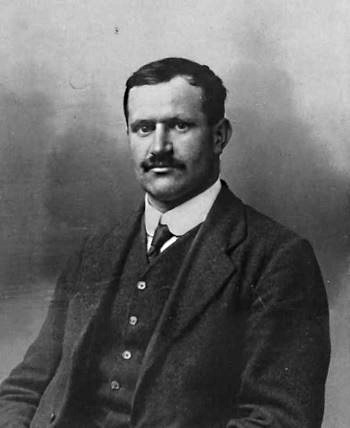 Harold Blackburn was born on 19 January 1879 in Dymock, Gloucestershire, the son of Edwin Walter Blackburn and Sarah Jane Blackburn (née Tate). Harold became an engineer and by 1901 worked as a bicycle maker and repairer in Doncaster. He moved to London around 1909. In association with Albert Walker he built the Blackburn-Walker biplane. He learned to fly at the Bristol School at Brooklands and gained his RAeC Aviators Certificate on 9 May 1911 flying a Bristol Biplane.
In 1912 Harold Blackburn helped establish a motorcycle manufacturing business with C S and E A Burney. When the first machines were successful the business was incorporated as Burney and Blackburn Ltd, although at this point Blackburn sold his stake. Despite his absence the business built motorcycles and engines under the brand name 'Blackburne'.
In September 1912 aircraft constructor Robert Blackburn (no relation) moved his flying school from Filey Bay in Yorkshire to Hendon. Harold Blackburn was appointed instructor and test pilot. He won the Wars of the Roses air race on 2 October 1913. Following which he became a test and demonstration pilot for Avro, flying early versions of the Type 504 while continuing his duties with Robert Blackburn.
With sponsorship from the Yorkshire Evening Post, on 2 October 1913 Harold Blackburn took part in a race dubbed 'The War of the Roses', between Blackburn's Type I and Lancashire rival Avro's Type 504. The race was over a 100 mile course and Blackburn flew with his Type I's owner, M G Christie, as passenger, while the Avro was piloted by F P Raynham, with Humphry Roe as passenger. Though for the most part the race was 'neck and neck', a precautionary landing by Raynham gave Blackburn the win.
At the Yorkshire Agricultural Show on 22 July 1914 he opened the first air-line service in Great Britain between cities flying to a time table, operating half-hourly trips in the Blackburn Type I between Leeds and Bradford, thus laying claim to the title of 'Britain's first airline pilot'.
On 29 August 1914, following the outbreak of World War I, Blackburn enlisted in the Royal Flying Corps Special Reserve, as 2nd Lieutenant (on probation), graded as Flying Officer. He received his 'B' Certificate (No 214) from the Central Flying School at Upavon, Wiltshire, and served with the RFC in France. He was promoted to Lieutenant on 24 April 1915, to temporary Captain on 3 July, graded as Flight Commander, and was confirmed as Captain on 1 September. He was posted to command 'C' Flight of 14 Squadron while still under formation. After working up, the squadron sailed to Egypt in November 1915. He was awarded the Military Cross (MC) on 1 January 1916.
In July 1916 Blackburn was promoted to Major and left 14 Squadron for various staff and instructional posts, firstly in Egypt then in the UK and France.
On its formation on 1 April 1918, Blackburn received a temporary commission in the RAF with the rank of Lt.-Colonel. Awarded the Air Force Cross (AFC) on 3 June 1919, he was awarded a permanent commission in the RAF on 1 August 1919 as a Lt.-Colonel (Wing-Commander when the RAF introduced its own ranking system the same day). He was posted second-in-command, Inland Area Aircraft Depot, RAF Henlow on 2 May 1921. Originally the No. 5 Eastern Area Aircraft Depot, it was renamed the Inland Area Aircraft Depot during his tenure.
In September 1924, Blackburn was appointed base Commander at the Aeroplane & Armament Experimental Establishment at Martlesham Heath, a position he held until November 1928. Plans were made to improve the infrastructure with new hangers, barracks and facilities. The main task of Blackburn's residency as base commander was to oversee these developments while maintaining the high standard of experimental work for which Martlesham was already known.
Blackburn retired from the RAF in 1929 with the rank of Wing Commander and moved to Jersey, where he took up sailing. When the German invasion of Jersey loomed in 1940, Blackburn took his daughter Susan to an evacuation barge but was told there was no more room. With the disregard for formalities typical of a pioneer, Blackburn waited until the barge was pulling away from the jetty then heaved his daughter onto it. The family spent World War II in Cheltenham before returning to Jersey in 1946.
Wing Commander Harold Blackburn MC, AFC died on 29 April 1959 in Jersey, Channel Islands.
80 Ronald Campbell Kemp
 Ronald Campbell Kemp was born on 8 December 1889 in Cultra, County Down, Northern Ireland, the son of David Campbell Kemp and Mrs. Kemp. His parents were Scottish and had gone to Ireland for reasons of business.
Kemp attended Oundle School in Northamptonshire, and then learned to fly with the Avro School at Brooklands. He gained his RAeC Aviator's Certificate on 9 May 1911, flying a Roe Biplane at Brooklands, and in July was retained by Avro to pilot the specially modified Type D in the Daily Mail 'Circuit of Britain' race. Unfortunately the aircraft had been modified without any analysis, resulting in a crash. Luckily Kemp was only slightly injured.
In August Kemp test flew the Howard Flanders monoplane and then during 1912 and 1913 worked for the Lakes Flying Company at Bowness, Windemere. When Geoffrey de Havilland gave up his post at the Royal Aircraft Factory in December1913, Kemp replaced him as test pilot. On 23 February 1914, flying the second F.E.2 (officially a rebuild of the earlier 1911 F.E.2), Kemp was injured (and his passenger Mr. Ewart Temple Haynes killed) in a crash at West Wittering, near Chichester, Sussex. In August 1915 he moved to Short Brothers at Rochester, replacing Gordon Bell as chief test pilot. He remained there until January 1918.
After the war he went to India as the Chief Inspector of Aircraft in India, eventually forming the Air Survey Co in late 1924, based at Calcutta Dum Dum airport and Rangoon, along with its subsidiary the Indian Air Survey and Transport Company, Ltd, formed in 1928, by which time his old friend Fred Raynham had joined the company. Both companies were taken over by the Fairey Aviation Co Ltd in 1930.
Kemp returned to England in 1947 and bought a boat yard on the river Hamble and settled in Curdridge, near Botley, in Hampshire.
Ronald Campbell Kemp died in 1979, in the New Forest, Hampshire.