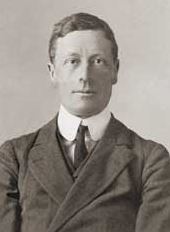
 Maurice Egerton was born was born on 4 August 1874 in London, the son of Alan de Tatton Egerton, 3rd Baron Egerton, and Anna Louisa Watson Egerton (née Watson-Taylor). He was commissioned as a 2nd Lieutenant in the Cheshire (Earl of Chester's) Imperial Yeomanry on 11 May 1900, promoted to Lieutenant on 19 May 1905. He transferred to the Cheshire (Earl of Chester's) Territorial Yeomanry on 1 April 1908, and was promoted to Captain on 13 September.
He was known as an aviation and motor car enthusiast and a friend to the Wright brothers. Maurice acquired the Short-Wright Flyer No. 4 on 26 November 1909 and started his attempts to fly. He ordered Short No 13 in December 1909, delivered April 1910. He gained RAeC Aviator's Certificate on 14 June 1910 on the Short-Wright biplane at Frank McClean's Eastchurch flying ground. That same year he was set to fly in competitions but crushed two fingers in the engine gears. He had hardly recovered when he almost lost his left leg in a serious crash. Egerton ordered two further Short machines: Short S.35 on 11 March 1911, delivered 12 April 1911 and Short S.59 on 25 November 1912.
Egerton received a temporary commission in the Royal Naval Volunteer Reserve on 21 April 1915, and was on the books of HMS President for the RNAS as a Lieutenant Commander. He was sent to the USA, and was based in Buffalo, New York, presumably as liaison with the Curtiss Aircraft Company, who were building flying boats for the RNAS.
He had time during these years to travel to British Columbia where he purchased 3 Mile House plots of land, 35,000 acres, along the Cariboo Highway. He also purchased a Star class sailing yacht and took part in races on the East Coast.
Returning to England, Egerton was transferred to the Ministry of Munitions on 1 May 1917. On its formation on 1 April 1918, he received a temporary commission in the RAF with the rank of Major. On the 2 November 1918 he was restored to the Establishment of the Cheshire Yeomanry, and placed on the RAF unemployed list on 3 April 1919.
After the war he was granted some land in Ngata area near Nakuru in Kenya under the Soldier Settlement Scheme of 1919. He later purchased a further 21,000 acres around the same area from Lord Delamere, and settled just outside Njoro, a place Lord Delamere had hoped to be the capital of British-governed East Africa. There, Egerton had begun constructing a castle in 1938 after the woman he intended to marry refused to start a family with him in the previous houses he had constructed for her. The outbreak of WW2 caused construction to stall for some years, being not completed until 1954.
From 1939 Egerton also threw all his energies and his entire fortune into agriculture. He founded the Egerton Farm School, now part of Egerton University. The school was meant to prepare white European youth for careers in agriculture.
On the death of his father in September 1920, Maurice became the 4th and last Baron Egerton of Tatton. He did not marry and on his death on 30 January 1958 in Njoro, Central Kenya, the barony became extinct, and his British country estate Tatton Park was bequeathed to the National Trust.
 James Radley was born on 9 February 1884 at Dunmow Hall, Slaidburn in Yorkshire, the son of James and Fanny Prescott Radley (née Coulton). He was commissioned as a Second Lieutenant in the 3rd Battalion, The Bedfordshire Regiment, on 7 February 1906 but resigned his commission on 18 May 1908.
Radley started as a racing driver before acquiring a Blériot XI monoplane in April 1910, which he flew frequently from Portholme aerodrome at Huntingdon and later Brooklands, where he gained his RAeC Aviator's Certificate on 14 June 1910. Earlier in June he had flown his Blériot at the first aviation meeting held in Scotland at Pollokshaws, Glasgow making seven flights.
Radley travelled to New York in late September aboard SS "Oceania" with his friend and colleague William Rhodes-Moorhouse and his business manager Reginald Hope. There he won the cross-country aviation race at Belmont Park in New York in October, covering 20 miles in 19 minutes and 46 seconds, an American speed record. They returned to the UK the following February aboard SS "Lusitania".
In 1911 Radley entered the Daily Mail Circuit of Britain Air Race and was to use an Antoinette monoplane, but he failed to start. That same year Radley and Rhodes-Moorhouse formed a company, Portholme Aerodrome Ltd, to design and build aircraft at St Johns Street, Huntingdon. The first locally designed and built aircraft flew from Portholme on 27 July 1911. The aircraft resembled the familiar Bleriot type. Portholme built the body for Radleys Rolls-Royce Silver Ghost to his own design. Radley entered the Silver Ghost into the 1912 Austrian Alpine Trial, but its 3-speed gearbox proved inadequate for the ascent of the Katschberg Pass. He also competed in 1913 and won in 1914 with test driver and riding mechanic 'Tubby' Ward.
In July 1912 Radley won a cross-country balloon race where he achieved a distance of 132 miles from Hurlingham.
For the 1913 Circuit of Britain race, Radley in co-operation with E C Gordon England designed and built the Radley-England Waterplane. It was damaged before the race and did not complete, the aircraft subsequently being modified and re-built.
Following the outbreak of WWI in August 1914, Radley joined the Royal Automobile Club Volunteer Force and took his personal Rolls Royce car to France to act as a civilian staff car driver for senior officers of the British Expeditionary Force.
Radley remained a director of Portholme Aerodrome Ltd until mid-1918, when he sold his shares to fellow director George F Joseph and resigned as director. Nothing seems to be known of Radley's life from this point on.
Radley died on 5 March 1959 at his home at Woodgreen, Christchurch, Hampshire.
 Alan Reginald Boyle was born on 8 October 1886 at Oakfield, Ayr, the eighth child of Captain David Boyle, 7th Earl of Glasgow GCMG, and Dorothea Elizabeth Thomasina Hunter Boyle (née Blair). He was educated at Haileybury College, Haileybury, Hertfordshire.
Boyle founded the Scottish Aeroplane Syndicate in 1909 and gained his RAeC Aviator's Certificate on 14 June 1910 at Brooklands flying an Avis monoplane built by the Syndicate. He took part in the 1910 Bournemouth international meeting, flying the Avis monoplane but unfortunately the machine turned over during a landing on rough ground and Boyle was thrown out, receiving severe head injuries from which he never fully recovered and which put an end to his flying career.
Following the outbreak of WWI, Boyle was commissioned as a temporary Lieutenant in the Royal Scots Fusiliers on 6 December 1914 and, from January 1916, the Royal Flying Corps as a balloon officer, where he gained his RAeC Aeronauts Certificate (No.101) on 17 November 1917.
On its formation on 1 April 1918, Boyle received a temporary commission in the RAF with the rank of Lieutenant Kite Balloon Officer in the 56 Balloon Section. Awarded the Air Force Cross (AFC) in 1919, he was put on the unemployed list in November that year.
From 1932 to 1945 he was president of the Scottish Gliding Union; and he also served as chairman of the aviation committee of the Scottish Council for Industry.
Alan Reginald Boyle AFC died suddenly on 10 October 1958 while shooting at the Blair Estate in Dalry, Ayrshire.
 John Armstrong Drexel was born on October 24, 1891 in Philadelphia, Pennsylvania, USA, the son of Anthony Joseph Drexel and Margarita Drexel (née Armstrong), and grandson of Anthony Joseph Drexel, millionaire banker and founder of Drexel University. Drexel took up aviation in 1909 and gained his Aero Club of America Certificate (No 8) in 1910. Drexel travelled to Europe in early 1910, first to France then England and, with William McArdle, whom he had met in France, founded the New Forest Flying School at East Boldre in May that year, gaining his RAeC Aviator's Certificate there on 21 June 1910, flying a Blériot Monoplane. On 12 August 1910, during the Scottish International Aviation Meeting at Lanark, he set the world altitude record of 6,750 feet in a Blériot monoplane.
During World War I, he enlisted with the French Lafayette Escadrille on 26 October 1916, serving until 1917. On 11 October 1917 he was commissioned Captain in the Aviation Section, U.S. Signal Corps, promoted to Temporary Major on 28 December 1917 and to Lieutenant Colonel on 26 August 1918. He returned to the United States on 8 June 1918 and was honorably discharged on 13 February 1919. From then on, Drexel shared his time between England and the USA, apparently finally residing in the UK from 1939.
John Armstrong Drexel died on 4 March 1958 Ashford, Kent.
 George Cyril Colmore was born on 14 September 1885 in Hathern, Loughborough, Leicestershire, the son of George Henry Colmore and Emily Laura Colmore (née Dashwood). He joined the Navy as a 15-year-old Cadet, going to the Thames Nautical Training College (also known as HMS Worcester) in Dartford, Kent. In 1910 at his own expense he joined the Royal Aero Club and learned to fly at Frank McCleans Eastchurch flying ground, gaining his RAeC Aviator's Certificate on 21 June 1910 flying a Short biplane. He was the first serviceman to gain a Royal Aero Club Aviator's Licence. Three weeks later Colmore entered the Bournemouth International Aviation Meeting from 6-16 July. As entrant No.7 he won the £100 prize offered by The Car fund, 'to the competitor who, on an all British machine, shall have performed most meritoriously during the meeting'. Following his success the RAeC approached the Admiralty and offered to train more Naval aviators.
In 1914 Colmore was transferred to the Royal Naval Air Service. He was confirmed in the rank of temporay Flight Lieutenant on 23 Nov 1914 (with seniority from 11 September) and appointed to HMA.4 at Kingsnorth Airship Station, Kent. He was confirmed as Flight Lieutenant on 31 December. After training, he was appointed on 23 July 1915 as first Commanding Officer of Luce Bay Airship Station (later West Freugh airfield). He was wounded in the leg by an overenthusiastic sentry whilst driving near Polegate on 16 April 1915, then on 4 September promoted Acting Flight Commander, eventually confirmed on 30 June 1916.
On 1 November 1916 Colmore was appointed to RNAS Howden as Captain of the Parseval airship HMA.No.4. In February 1917 he was sent to the Survey Section at RNAS White City, and on 14 March assumed command of RNAS Wormwood Scrubs (HMS President). Colmore was also attached to the RNAS Examination Committee and in autumn 1917, in that capacity, visited the The Somme. He was recommended for special promotion to Squadron Commander, but this was rejected on 1 January 1918, and he was promoted instead as Acting Squadron Commander.
On its formation on 1 April 1918, Colmore received a temporary commission in the RAF with the rank of Major, still as Commanding Officer, Wormwood Scrubs. He was awarded a permanent commission in the RAF on 1 August 1919 as a Major (Squadron Leader when the RAF introduced its own ranking system the same day) and retired on 12 October 1919.
Lieutenant George Cyril Colmore RN died 23 June 1937 in Cerney Wick, Gloucestershire
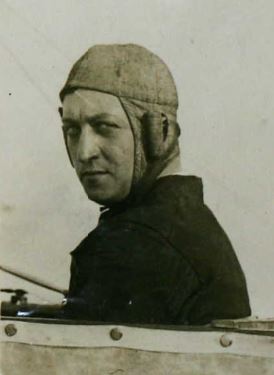 George Arthur Barnes was born on 19 July 1883, Hoxton, London, the son of Franks Barnes and Amelia Barnes (née Williams), in the Admiral Keppel, one of his father's many pubs in and around London. He starting cycle racing competitively in 1901, his first pedal cycle race being in Southend over Easter weekend in April 1901. He earned the 1 mile tandem cycle record at Crystal Palace on 8 October 1901. He also earned the one hour and 50 miles records at Crystal Palace on 19 June 1902. The progression to motorcycling was natural and by the end of 1903 he was purely a motorcycle racer. In early 1903 George gained employment as a professional rider for the BAT motorcycle manufacturing company. Between 1904 and 1905 in partnership with George Wilton he manufactured and sold motorcycles trading as George A. Barnes & Co.; the partnership was dissolved on 17 August 1905.
In September 1909 it was announced in the Daily Mail that he would attempt to win the £1000 prize for the first British machine to fly over a circular mile piloted by a British aviator. On 11 October 1909 the Barnes monoplane succeeded on in flying for a distance of well over a mile and a half, very nearly completing a circle, at Abbey Wood, near Woolwich. Barnes kept the machine fairly close to the ground, and this probably accounted for the incident that brought this trial flight to a conclusion when a gust of wind caused his crashing into a ditch.
In May 1910 he joined the staff of Humber Motor Company Ltd. as a pilot and gained his RAeC Aviators Certificate on 21 June that year, flying a Humber Monoplane at Brooklands. Over the next couple of years was busy flying demonstration and exhibition flights for Humber all over the country. At the Folkestone International Air Meeting on 28 September 1910 he suffered a serious accident, leaping from his aircraft from an altitude of 30 feet and suffering a fractured skull and broken left wrist.
Barnes died of pneumonia on 1 February 1919 at Paddington, London.
 George William Patrick Dawes was born on 25 January 1880 in Dublin, Ireland, the son of George Augustus Dawes and Pauline Mary Dawes (née Hayes). He was career soldier and much decorated Boer War veteran. He was commissioned in the Royal Berkshire Regiment as a 2nd Lieutenant on 27 July 1901. He was seconded for service with the West African Frontier Force under the Colonial Office on 18 November 1903, granted the local rank of Lieutenant.
On his return, Dawes was promoted to Lieutenant on 7 May 1904 and seconded for service with the Indian Army. He was restored to the Establishment of the Royal Berkshire Regiment on 27 January 1909.
Dawes undertook ying training a civilian club at Dimstall Park, Wolverhampton, at his own expense and gained his RAeC Aviators Certificate on 26 July 1910, flying a Humber monoplane at Wolverhampton.
Dawes was promoted to Captain on 30 April 1911 and in April 1912 he was attached to the No 2 Company, the Air Battalion, RE, at the start of the rst formal course to be run by the unit. The theoretical phase of the course had barely begun when the Air Battalion was subsumed into the RFC. The course was completed under the auspices of the Central Flying School. He was seconded for service with RFC on 10 April 1912. Graded as Flying Officer on 13 May, he was posted to 2 Squadron. There he was one of six pilots who transferred 2 Squadron from Farnborough to Montrose between 10 and 26 February 1913, flying a Maurice Farman. He was appointed Flight Commander on 30 May, commanding A' Flight, and on 26 August Dawes, with his mechanic Sgt Finlay Traylor, was one of seven pilots from 2 Squadron making up the first overseas deployment of the RFC, flying Maurice Farman S7 Longhorn s/n 207 from Montrose, via Stranraer and across the North Channel of the Irish Sea, to Dundalk and thence to Limerick in Ireland.
Following the start of WWI, the squadron flew to France on 13 August 1914. On the 22nd Dawes was flying as observer with Major Longcroft in a B.E.2a, when the first German aircraft seen in the War, an Albatros biplane, was encountered over the RFC aerodrome at Maubeuge. On 9 September he was appointed Squadron Commander, with the temporary rank of Major.
Dawes commanded 11 Squadron at Van Galant for eight months in 1915, and on 12 December 1915 was appointed Wing Commander, with the temporary rank of Lieutenant-Colonel. On 20 September 1916 he was appointed as Commander of the 16th Wing RFC on the Macedonian Front, the Wing comprising of 47 Squadron, No 17 Balloon Section and an Aircraft Park. On 14 September 1916 he was promoted to Major (temporary Lieutenant-Colonel).
Dawes attempted to visit the Wing Commander at Mudros on 25 March, and was posted missing after suffering engine failure and having to make a forced landing in a remote spot. He was eventually located by an air search and then brought back to Salonika by destroyer on 27 March.
Promoted to Brevet Colonel on 4 June 1917, on its formation on 1 April 1918, Dawes received a temporary commission in the RAF with the rank of Lieutenant-Colonel. On 19 June 1918 he handed over command of the 16th Wing RAF to Lt Colonel G E Todd and returned to Home Establishment, where he became Commandant of 90th Wing, III Brigade, of the Royal Air Force from 6 November 1918 to 1 March 1919. Dawes was posted to Headquarters III Brigade on 3 December 1918 and may have been the acting commander of III Brigade until 7 March 1919. He was appointed the temporary rank of Group Commander on 25 June 1919 and to Wing Commander on 18 October.
Appointed to the Distinguished Service Order (DSO) on 1 January 1917 and the Air Force Cross (AFC) on 22 December 1919, Dawes had also received several foreign awards for his service in World War I:
| 24 February 1916 : | appointed Chevalier de la Légion d'honneur (Knight of the Legion of Honour), conferred by the President of the French Republic. |
| 30 January 1918 : | awarded the Order of the White Eagle, 4th Class (with swords), conferred by His Majesty the King of Serbia. |
| 30 January 1918 : | appointed Commander of the Order of the Redeemer, conferred by the Hellenic Government. |
| 21 September 1918 : | appointed Officier de la Légion d'honneur (Officer of the Legion of Honour), conferred by the President of the French Republic. |
On 17 March 1920, Dawes relinquished his temporary RAF commission and returned to Army duty, and was appointed as Major in the Tank Corps on 11 May 1920, with seniority from 14 September 1916. He retired on retirement pay on 22 January 1923, granted the rank of Lt.-Colonel in the Regular Army Reserve of Officers. As of 15 April 1935 he ceased to belong to the Reserve of Officers.
Following the outbreak of WW2, Dawes was commissioned into Royal Air Force Reserve, Reserve of Air Force Officers, Administrative and Special Duties Branch, as Pilot Officers, on probation, on 8 July 1940. He was granted the war substantive rank of Flying Officer on 8 May 1941 and Flight Lieutenant on 1 July 1942.
Granted the war substantive rank of Squadron Leader on 3 November 1944, and appointed Member of the Most Excellent Order of the British Empire (MBE) on 1 January 1946, Dawes relinquished his commission under the provisions of the Navy, Army and Air Force Reserves Act, 1954, retaining the rank of Wing Commander on 10 February 1954.
Lieutenant-Colonel George William Patrick Dawes, DSO, MBE, AFC, died on 17 March 1960 in Nottingham.
 Edwin Alliott Verdon Roe was born on 26 April 1877 in Patricroft, Eccles, Lancashire, the son of Edwin Hodgson Roe and Anna Sophia Roe (née Verdon). Although his father had hoped Alliott would follow his profession as a doctor, Roe left home when he was 14 to go to Canada where he had been offered training as a surveyor. When he arrived in British Columbia he discovered that a slump in the silver market meant that there was little demand for surveyors, so he spent a year doing odd jobs, and then returned to England. There he served as an apprentice with the Lancashire & Yorkshire Railway. He later tried to join the Royal Navy to study marine engineering at King's College London, but, although he passed the technical and mathematics papers, he was rejected for failing some of the general subjects. As well as doing dockyard work, Roe joined the ship SS Jebba of the British & South African Royal Mail Company as fifth engineer on the West African run. He went on to serve on other vessels, finishing his Merchant Navy career as third engineer aboard the SS Ichanga. It was during these voyages that he became interested in the possibility of building a flying machine, having observed the soaring flight of albatrosses.
In 1902 Roe became a draughtsman in the motor car industry, but was keenly interested in flight and built many models in his spare time. In 1906 he took the post of Secretary to the Aero Club, but this was only to last a few days. Following a letter Roe had written to The Times, George Davidson gave him the post of draughtsman on the Davidson Air-Car monoplane he had designed. Davidson was financed by Lord Armstrong (of Armstrong-Whitworth) and it was decided to build the machine in America. Roe went out to Colorado in April 1906 and there created drawings for the Davidson machine. After disagreements about the design of the machine and problems with his salary, Roe, who had been sent back to Britain to deal with patenting the design, resigned.
Roe then began to build a series of flying models, and won a Daily Mail competition with a prize of £75 for one of his designs in 1907. With the prize money, he set out to design and built his own real aircraft. He set up shop in the stables behind the surgery belonging to his brother, Dr Spenser Verdon Roe (1874 - 1941) in Putney, London, the completed machine being taken to Brooklands, near Weybridge, for testing. There, the Roe 1 made short hops on 8 June 1908, but his flights were not registered officially by the Royal Aero Club and Lord Brabazon took the honour of gaining the first RAeC Aviator's Certificate.
After encountering problems with the management of Brooklands, Roe found a new site at Walthamstow Marshes in East London (now part of the Lee Valley Regional Park) where he adapted two railway arches as a workshop. The resulting Triplane, erected with the assistance of E V B Fisher and R L Howard Flanders and fitted with a 9 h.p. JAP engine, created history on 13 July 1909 when the short hops officially became flights, and by July 23 it had flown 900ft and A.V. Roe was recognised by the Aero Club as the first Englishman to design, build and fly an all-British aeroplane.
In November 1909, facing eviction from Walthamstow Marshes, Roe moved, first to Old Deer Park, Richmond, Surrey and then to Wembley Park, Middlesex. By now, Roes funds were getting low. His brother Humphrey Verdon Roe (b. 18 April 1879; d. 25 July 1949) was himself a successful businessman and owner of Everard and Company of Brownsfield Mills, Manchester, so, on 1 January 1910, with financial assistance from H.V., the private firm of A V Roe and Company was founded. The fledgling company was given engineering space at Brownsfield Mills and from then the company products were marketed under the trade name Avro. Meanwhile, the management of Brooklands had undergone a change and this enabled Roe to leave Wembley Park and return there. It was there that he gained his RAeC Aviator's Certificate on 26 July 1910, flying his Triplane.
In early 1911 Roe built a tractor biplane, the Type D, one of which was fitted with floats, the first English seaplane. The Type D created considerable success for the Avro Company, leading as it did to the extremely successful Type 504.
Roe also set up a flying school at Brooklands but, with its increasing popularity as a flying centre, Roe was forced to leave Brooklands and moved the school to Shoreham, a site adjacent to the River Adur which made it ideal for both land or water machines.
By early 1913, orders had grown considerably and this enabled the firm to reform as a limited company on January 11, 1913. By the following April they had outgrown Brownsfield Mills and moved into larger premises in Miles Platting. The outbreak of World War I saw a bigger surge in orders and even these new premises were inadequate. Fortunately, the nearby company of Mather & Platt had just completed a new extension and these premises were rented to become the Park Works of A.V. Roe. In order to have its own works, however, a large piece of land adjacent to the Park Works was acquired, although this, the Newton Heath Works, was not completed until the end of 1919.
In 1916, Roe purchased land in Hamble for the establishment of an aircraft factory on what became known as the South airfield. Land was also purchased in 1916 for the building of 24 houses for employees. Production and test flying started there late in 1917.
In 1918, Verdon-Roe was appointed an officer of the Most Excellent Order of the British Empire (OBE).
The end of World War I saw an immediate cancellation in military orders resulting in severe financial problems. All main production moved to Manchester and, on a very much reduced staff, Hamble became an experimental aircraft department. In August 1920 68.5% of the company's shares were acquired by Crossley Motors who had an urgent need for more factory space for vehicle body building. In 1928 Crossley Motors sold Avro to Armstrong Siddeley Holdings Ltd., and the same year, Roe resigned from the company he had founded.
One of Roe's persistent interests was the application of aerodynamics to the motor-cycle, and in 1922 he produced a monocar, a single-track vehicle in which the rider had a bucket seat. The first model, with a Barr and Stroud sleeve-valve engine, had small outrigger wheels for stability at low speeds. These were discarded in the later "Uno," which had much larger wheels with the springing actually inside that at the front.
Having resigned from Avro, Roe was looking for a new venture and in November 1928, he, along with John Lord who had resigned from Avro at the same time, became joint managing directors of E Saunders of East Cowes, Isle of Wight. At an Extraordinary General Meeting on 3 July 1929, the company name was changed to Saunders-Roe. Roe concerned himself more with the financial health of the company rather than its technical side. Roe had faith in the commercial future of flying boats and pressed Saro to invest in this type of aircraft.
Following large investment from the Aircraft Investment Corporation, on 6 February 1931 the board of Saunders-Roe was reconstituted, with Roe as chairman and joint managing director with Lord. He resigned his joint managing directorship on 14 November 1934, remaining as chairman until 1937, when he became honorary President until his death.
Roe was knighted in 1929. In 1933 he changed his surname to Verdon-Roe by deed poll, adding the hyphen between his last two names in honour of his mother.
Another interest of his later years was monetary theory and the possibility of reform to reduce the burden of debt upon the economy and to establish the prerogative of the State over currency creation; he was a vice-president of the Economic Reform Institute.
Sir Edwin Alliott Verdon Roe, OBE, Hon. FRAeS, FIAS died on 4 January 1958 at St Mary's Hospital, Portsmouth.
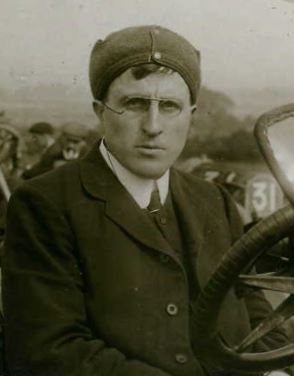 Arthur Edward George was born on 17 June 1875 in Fordington, Dorset, the son of Edward George and Frances George (née Major). The family moved to Newcastle upon Tyne while he was a child. He was a talented athlete, being a swimmer, figure skater and racing cyclist at international level.
After serving an engineering apprenticeship in Newcastle, he lived for some time in South Africa, where he became national cycling champion and represented South Africa at the 1899 UCI Track Cycling World Championships in Montreal, Canada. He served with the Cape Colony Cyclist Corps from 7 January 1901 until 12 May 1902 in the Second Boer War, receiving the Queen's South Africa Medal with three clasps.
Later he became a motor engineer, salesman and coachbuilder in partnership with Robert Lee Jobling, trading under the name George and Jobling. In 1904 the company took over the premises previously used by Robert Stephenson & Co to build the revolutionary Rocket steam engine.
In 1902, having returned to England, he became a motor engineer, salesman and coachbuilder in partnership with Robert Lee Jobling, trading under the name George and Jobling. In 1904 the company moved to premises which had previously been used by Robert Stephenson & Co to build the revolutionary Rocket steam engine, premises which it was to occupy for the next 60 years. George and Jobling first manufactured bicycles and later motor vehicles and automobile bodywork. It also sold motor vehicles and was an agent for many manufacturers, including Argyll, Darracq, Hillman, Ford and Fordson. Between 1907 and 1970, the firm had branches in Hexham, Glasgow, Darlington, Bowness and Leeds and is credited with inventing the forerunner of the trolley-jack and the breakdown-truck. It became well known as 'expert witnesses' in court cases involving serious motoring accidents.
George was a keen racing driver and competed at home and in mainland Europe in road races, hill climbs and sand racing. He achieved third place driving a Darracq in the 1908 RAC Tourist Trophy race, during which he also set the fastest lap time. Two other pioneer aviators, John Moore-Brabazon and Toby Alfred Rawlinson, also took part in the 1908 IOM TT. In 1911 George & Jobling built a Model T Ford Racer. The car was raced by George, who won the 1912 All-Ford race at Brooklands with Henry Ford watching from the stands. It became known as the Golden Ford the following year when it was fitted with a narrow single-seat body made of polished brass.
In August 1909 George became an active member of the Royal Aero Club of the United Kingdom and learned to fly on a Voisin biplane called Bird of Passage which he had bought from J T C Moore-Brabazon. He later sold the Bird of Passage to Cecil Grace. He designed and built his own aeroplane, which featured hollow spars, a steerable tail-wheel and unique 'triplicate control column which controlled not only roll and pitch but also yaw. George gained his RAeC Aviator's Certificate on 6 September 1910, flying this prototype aircraft at McClean's Eastchurch flying ground. Unfortunately, later the same year he crashed it at an air display in Newcastle. George applied to the banks for more funds to continue designing and building aircraft was refused on the grounds that it was too dangerous. After this setback, he concentrated his efforts on customising and selling cars.
Following the outbreak of WWI, George volunteered for military service, and was commissioned as a temporary Lieutenant in the Northumberland Volunteer Regiment on 1 September 1916, transferring to the Northumberland Motor Volunteer Corps on 8 July 1917. He was appointed temporary Major on 2 January 1918 and resigned his commission on 23 January 1919.
Post war, George took an active interest in flying throughout his life: he was a leading member of the Newcastle upon Tyne Aero Club; he obtained his Civil Aviation Class A Pilot's Licence in 1935 and his Class A glider pilot's licence in 1937. During the National Strike of 1926, he was involved in driving newspapers from Newcastle to London.
During World War II he served from July 1939 until November 1940 as Commanding Officer of 131 Tyneside Squadron, Air Defence Cadet Corps , followed by volunteer service in both the Home Guard and the Royal Navy.
Arthur Edward George died of cancer on 8 September 1951 in Bingley, Yorkshire. His funeral was held in Newcastle and was attended by local dignitaries, representatives of the aviation world and previous employees. The local RAF Air Cadets performed a fly-past over the funeral ceremony. In honour of his services to aviation, the Royal Aero Club awarded him a posthumous Silver Medal.
 Richard Francis Ernest Wickham was born on12 November 1886 in Twickenham, Middlesex, the son of Ernest Edward Wickham, Registrar of Shorditch County Court, and Hannah Brooking Wickham (née Sanders). Like his father, he attended Winchester College, (Du Boulay's boarding house on Southgate Hill), leaving there in April 1904. His further education is not known, though it appears he passed the Law Society Preliminary Examination in July 1904.
He spent between May 1908 and May 1909 in Canada, but by mid-1910 was once again in England where he joined the Royal Aero Club and gained his RAeC Aviators Certificate on 20 September 1910, flying a Sommer biplane at Brooklands. Notably the address on his Certificate is given as Ritz-Carlton Hotel, Montreal. The then bought the Avis II monoplane, which he intended to make an attempt for Baron de Forest's cross-Channel prize, a feat he did not eventually undertake.
Wickham was presumable a wealthy young man, as he described himself in the 1911 census as being of independent means. In May 1911, he set sail for New York, with onward journey to Porcupine, Ontario. His intentions in visiting the Americas are unknown, but likely he gave exhibition flights in both USA and Canada, possibly travelling as far west as Vancouver.
One report has Wickham returning to England in April 1912, although another gives him in Canada in early 1915. Possibly the 1912 voyage was merely a visit. Either way, on 25 September 1915 he joined the RNAS as a Flight Sub-Lieutenant, for temporary service, with seniority of 26 June, and was appointed to HMS Fisgard.
Posted to RNAS Kingsnorth on 12 May 1916, RNAS Capel on 14 June 1916, he was promoted to Flight Lieutenant on 31 December 1916. He was posted to RNAS Wormwood Scrubs on 29 March 1917 and RNAS Pulham on 31 December. On 11 August 1917 he was appointed Cavaliere dell'Ordine della Corona d'Italia (Knight of the Order of the Crown of Italy) by His Majesty the King of Italy.
On its formation on 1 April 1918, Wickham received a temporary commission in the RAF with the rank of Captain, remaining at Pulham Airship Station, but was put on the unemployed list on 11 March 1919.
On 19 October 1920 left England for Mombasa, seemingly intending to live in East Africa. However, on 10 February 1925 he returns to England from Durban, South Africa, with his new wife.
Wickham was granted a commission for the duration of hostilities as Pilot Officer on probation with the Royal Air Force Reserve, Reserve of Air Force Officers, Administrative and Special Duties Branch on 26 September 1939. Promoted to Flying Officer on 21 April 1940, he was granted the war substantive rank of Flight Lieutenant on 22 September 1942. He was promoted to the war substantive rank of Squadron Leader on 1 September 1943.
Squadron Leader Richard Francis Ernest Wickham died at RAF Hospital Halton on 28 June1945.