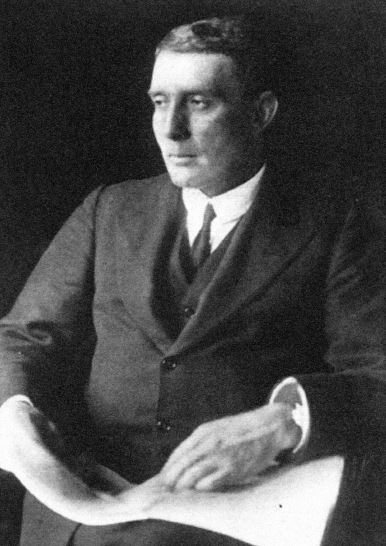
 Francis Kennedy McClean was born on 1 February 1876 at Ferncliffe, just outside Tunbridge Wells, the son of Dr. Francis McClean and Ellen McClean (née Greg), and was educated at Charterhouse, Clifton College and the Royal School of Mines, before attending the Royal Indian Engineering College at Cooper's Hill. He worked as a civil engineer in the Indian Public Works Department from 1898 to 1902, before returning to England and joining the family business. In 1902 he became a director of the Cannock Chase Colliery Company. Upon his father's death in 1904, he became extremely wealthy and able to pursue his interests without need for employment.
McClean was fascinated by astronomy and travelled widely studying eclipses and visiting observatories and also embraced ballooning. He had his first balloon ascent on 12 July 1907 with Charles Rolls as pilot. Returning to England from an astronomical expedition in May 1908, he purchased his first balloon, the Corona. Later that year he was assistant to Griffith Brewer in the Gordon-Bennett balloon race from Berlin. In the next year's race from Zurich he was a pilot, and on 7 December of that year had his first experience of heavier than air flight when he flew with Wilbur Wright at Le Mans.
In late 1908 McClean commissioned the first aircraft built by Short Brothers, the Short No 1, which he received in July 1909 but was unsuccessful. In March 1909 Short Brothers arranged to build Wright biplanes under licence, and McClean was allocated Short-Wright No 3, which he received on 16 October. His first straight flight was on 2 November.
Early in 1909 Griffith Brewer and Charles Rolls bought 400 acres of land at Muswell Manor and Frank McClean paid for it to be levelled and converted into a suitable airfield. Later in 1909 Rolls had started using fields at Stonepitts Farm, near Eastchurch village, on the Isle of Sheppey, Kent, to teach himself to fly and it was agreed that it was the less soggy of the two sites and so Frank bought the farm and told all Aero Club members that they could move there for a rent of one shilling per year and use of the airfield.
In 1910 Short brothers changed from producing Wright-type aircraft to the Sommer type, and McClean acquired Short-Sommer No 2, c/n S.28, from Moore-Brabazon in August that year. Flying at Eastchurch he gained his RAeC Aviator's Certificate after flying the Short S.28 biplane on 20 September 1910, having earlier gained his RAeC Aeronauts Certificate (No. 11) on 18 May 1909.
Following the death of Cecil Grace in December 1910, McClean took on the unpaid post of test pilot for Short Brothers, a post he kept until April 1913. In February 1911 he offered to let both the Admiralty and War Office use the aircraft and airfield at Eastchurch to teach naval and military personnel to fly heavier-than-air machines. Although the War Office declined the Admiralty accepted and started to train the first naval aviators, with Cecil Grace carrying out the tuition.
McClean also was a pioneer in aerial photography: with the help of Hugh Spottiswoode he took some acclaimed photographs of the wreck of the SS Oceana just off the coast at Eastbourne. In August 1912 he flew a floatplane between the upper and lower parts of Tower Bridge and underneath London Bridge.
In 1914 he made a flight following the course of the Nile between Alexandria and Khartoum in a specially built four-seater aircraft, the Short S.80 Nile. Beset by mechanical problems, the flight took from 2 January until 22 March.
Following the outbreak of the First World War, McClean was commissioned in the Royal Naval Air Service on 6 August 1914, with the rank of Flight Lieutenant. He carried out patrols in the English Channel and was promoted to Flight Commander on 14 February 1915. He took command of the Naval Flying School at Eastchurch from February to March 1915. On 26 November he was appointed Acting Squadron Commander at RNAS Chingford promoted to Squadron Commander on 1 January 1916. On 29 June 1917 McClean was promoted to Acting Wing Commander, in charge of Dover Aerodrome.
McClean transferred to the Royal Air Force when it was formed in 1918 with the rank of Lt.-Colonel. Awarded the Air Force Cross on 1 January 1919, he was transferred to the unemployed list on the 19th.
McClean was a founder member of the Aero Club of Great Britain (later the Royal Aero Club) and was chairman in 1923-24 and again from 1941 to 1944. He was to be seen at many aeronautical sporting events and in 1923 was the entrant of the winning aircraft (a Sopwith Gnu flown by Squadron Leader W H Longton) in the first Grosvenor Challenge Cup Race. Three years later, on 3 July 1926 he was knighted in recognition of his services to British aviation, and in the same year the RAeC awarded him its highest honour, the club's Gold Medal.
McClean was appointed High Sheriff of Oxfordshire for 1932. On the outbreak of World War II re-joined the RNVR in an advisory capacity as Lt.-Commander, but retired through ill-health in 1944.
Lieutenant-Colonel Sir Francis Kennedy McClean, AFC, died in a London nursing home on 11 August 1955, after a long illness.
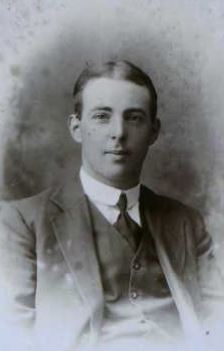 Edward Keith Davies was born on 10 June 1886 in London, the son of William George Davies and Alice Davies (née Riley). In his early life he normally went by Keith Davies, but in his later years appears to have styled himself Edward Keith-Davies. He trained as an engineer and later became interested in aviation. He started his flying career with Claude Grahame-White early in 1910, and assisted with the famous London to Manchester flight. He then carried out experimental work on monoplanes with the Humber Company and on 5th October 1910 won a prize for duration flying at Brooklands. He gained his RAeC Aviator's Certificate on 11th October, after tuition at the Hanriot Flying School at Brooklands. Davies was the school's first pupil.
In 1910 Captain Walter George Windham was invited to supply aircraft for India's first aviation meeting, preceding the United Provinces Exhibition in Allahabad. There were two biplanes and four monoplanes, all of which had been supplied by Humber. The aeroplanes were shipped Bombay in large crates aboard the merchant ship SS Persia, and they were then sent on by rail in special trucks to Allahabad. Two aviators were selected by Humber to represent the firm at Allahabad, Davies and Henri Péquet. Davies became the first person to fly an aeroplane in India; he assembled one of the monoplanes and made a flight of 200 yards on 25th November 1910. The Exhibition ended on 28 February 1911, following which the monoplanes were taken to Bombay where they were flown successfully at the Oval, Davies flying there from one end of the Oval to the other amid great acclaim, and as a novelty, flights were also made in darkness, the ground being lit up with lamps.
On 5 October 1912, Davies was the second officer to be gazetted to the Royal Flying Corps Military Wing, Special Reserve of Officers, commissioned as a Second Lieutenant (on probation). Following the outbreak of WWI, Davies reported for duty on 5 August 1914 and was posted to the Central Flying School, Upavon, Wiltshire, where he was appointed Flying Officer on the 30 October. He was attached to the Royal Aircraft Factory, Farnborough, as an experimental pilot on 21 November and was one of the first pilots to undertake night-flying tests.
Confirmed in rank as 2nd Lieutenant on 10 December 1914, Davies was posted to 2 RAS on 1 January 1915 then to 1 Squadron, with whom he embarked for France on 4 March, flying Avro 504, s/n 754. Promoted to Lieutenant on 24 April 1915, he was posted to 1 RAS on 3 May. A member of the AID at Farnborough, he was appointed Flight Commander, with the temporary rank of Captain, on 5 November, and promoted to the substantive rank of Captain on 1 December 1915.
On 11 April 1916, Davies resigned his commission and in October took up a post with Parnall & Sons, where it was intended that he should take on the duties of a test pilot flying both landplanes and seaplanes, at a salary of £1,000 per annum. There he was also responsible for the concept of the Scout (aka Zepp-Chaser). After his early work with the Scout, he left the company to take over an aircraft factory in London until the end of the war.
Meanwhile Davies, with F Boyle Monkman, had formed Keith and Boyle, Ltd. in mid-1913, registered with an authorized capital of £2000 and offices at 31, Gt. James Street, Bedford Row, W. C., to carry on the business of manufacturers and builders of motorbuses and chars-a-bancs, motor-haulage contractors, etc. Davies, although not participating in an active manner in the management of the business, had many technical qualifications and filled a very useful position on the board of directors. Following the war, he returned to this business, where he would appear to have remained until the early 1950s. In 1929 Keith & Boyle's "Orange Luxury Coaches" of Brixton, London, acquired the controlling interest in the Bournemouth firm, when F Boyle Monkman and E Keith Davies joined the board.
Captain Edward Keith Davies died in April 1968 in London.
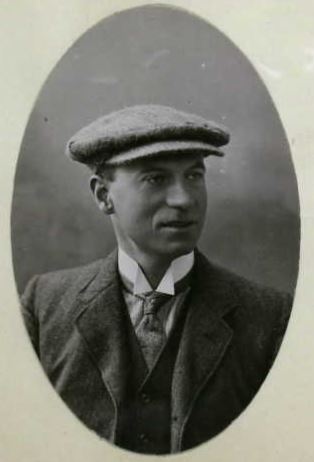 Maurice Ducrocq was born 4 December 1874 in Paris, France, and gained his RAeC Aviator's Certificate on 1 November 1910 on a Farman Biplane. He had done his flying training at the Hewlett-Blondeau school at Brooklands and was the school's first graduate. On 31 December that year he broke the British Passenger-Carrying Record, flying a distance of 48 miles 1,553 yards in 1 hour 11 minutes in his own Farman biplane. He became a regular at carrying passengers at Brooklands, as well as teaching pupils to fly.
Ducrocq was the General Agent for the British Empire for Nieuport monoplanes from 1911, the UK agent for Viale engines, and managed Hanriot (England) Ltd. He formed the Ducrocq Flying School at Brooklands and had the distinction of teaching John Alcock to fly. In the second half of 1913, the school became the Ducrocq and Lawford School, when Ducrocq partnered with Eardley H Lawford, and later that year Ducrocq and Lawford became agents for the French Champel biplane.
During the First World War, Maurice Ducrocq worked as a test pilot for Vickers.
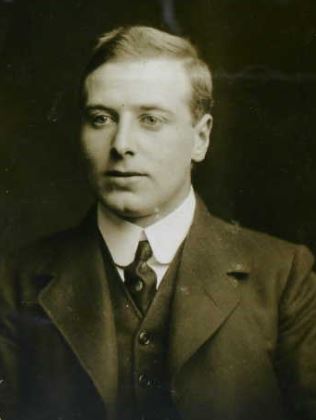 James George Weir was born on 23 May 1887 in Cambuslang, Lanarkshire, Scotland, the son of James Galloway Weir and Mary Douglas Weir (née Richmond). He was educated at Dollar Academy, Glasgow University and the School of Mines, Freiburg.
Weir was commissioned on 24 February 1906 as an 2nd Lieutenant in the 3rd (Renfrewshire) Volunteer Battalion, Princess Louise's (Argyll and Sutherland Highlanders), promoted to Lieutenant on 1 November 1907. On 1 April 1908 he transferred to the 3rd Highland (Howitzer) Brigade, Royal Field Artillery, being promoted to Captain on 1 June 1909.
Weir gained his RAeC Aviator's Certificate on 8 November 1910, flying a Blériot Monoplane at Hendon. On 28 October 1914 he was seconded to the Royal Flying Corps as a Flying Officer, promoted to Flight Commander on 24 March 1915 and Squadron Commander 22 June 1916. On 14 December 1916, Weir became Deputy Assistant Director, War Office (graded as a Staff Captain) and was promoted to Major on24 May 1917 (with effect from 1 June 1916) and to temporary Lt Colonel on 21 March 1917.
On its formation on 1 April 1918, Weir received a temporary commission in the RAF with the rank of Lt.-Colonel, rising to Acting Brigadier-General on 24 May 1918.
Weir received several awards for his service in World War I:
On 15 February 1919 he was transferred to the Unemployed List and on 28 September 1920 relinquished his Commission in the RAF on appointment to the Territorial Force. Weir was appointed a Flying Officer in the Reserve of Air Force Officers on 20 Apr 1923, becoming Air Commodore on 18 May 1923.
In 1926 Weir helped form, and became Chairman and Managing Director of, the Cierva Autogiro Company. In 1935, he became a Director of the Bank of England. He was also deputy director of the engineering company G & J Weir Limited.
Air Commodore James George Weir, CBE CMG died on 7 November 1973 in Ayr.
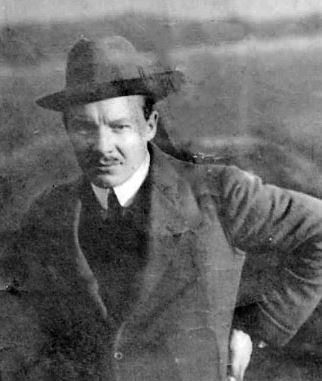 Hugh Evelyn Watkins was born in late 1881 in Kensington, London, his father a serving army officer. He was commissioned as a 2nd Lieutenant in 3rd Essex Regiment (Militia) on 27 February 1902, being promoted to Lieutenant on 12 December 1903. The 3rd Essex Regiment transferred as a unit of the Army Reserve on 12 July 1908, and Watkins became a Lieutenant in the Special Reserve of Officers.
Watkins gained his RAeC Aviator's Certificate on 8 November 1910, flying Captain Edward M Maitland's Howard Wright biplane at Brooklands. He had intended to fly this same machine in the Baron de Forest £4,000 Cross-Channel Prize contest. The machine was to have flown from Shorncliffe, fitted with a special compass, and with wireless telegraphy apparatus, by which Watkins hoped to be able to keep in touch with Captain Maitland, who would be following the flight on a tug. Unfortunately an accident while experimenting with the machine eliminated him from the competition, eventually won by Thomas Sopwith.
In 1911, Douglas Mawson, who had accompanied Ernest Shackleton's British Antarctic Expedition of 190709, planned his own Antarctic expedition. He considered taking a plane to the Antarctic, which could work as a reconnaissance tool, transport cargo, and assist with search and rescue. Crucially, as no plane had yet been taken to the continent, it could also be used to generate publicity. Unsure of the type of plane he should take, but considering a Blériot, Mawson mentioned his plans to Scott's wife Kathleen Scott, an aircraft enthusiast. She recommended he take a monoplane, and conveyed his interest to Watkins. He had connections with aircraft manufacturer Vickers Limited, which had recently entered into a licence agreement to build and sell aircraft in Britain designed by the Frenchman Robert Esnault-Pelterie. On Watkin's and Kathleen Scott's advice, Mawson purchased a Vickers R.E.P. Type Monoplane, one of only eight built. The machine was duly shipped to Australia aboard SS Macedonia, with Watkins and mechanic Frank Bickerton travelling separately aboard SS China. A series of public demonstrations were planned in to assist in fund-raising, the first of which was scheduled for 5 October 1911 at the Cheltenham Racecourse in Adelaide. Unfortunately the aircraft crashed during this flight, Watkins being slightly injured. Perhaps this was fortuitous as Watkins found the aircraft difficult to handle in Adelaide; he would have found it next to impossible in windswept coastal Antarctica.
No longer needing a pilot, and believing him to be responsible for the crash, Mawson dismissed Watkins and he returned to the UK. The aircraft was shipped to Antarctica for use as a tractor and abandoned there. Its remains were discovered in 2010.
Watkins resigned his commission in the Essex Regiment on 25 June 1913 but, following the outbreak of WWI, was reinstated with his old rank on 16 September 1914. He was promoted to Captain on 11 December 1914 and wounded in action in February 1915. He was seconded for service with the Machine Gun Corps on 13 December 1915, restored to the Establishment of The Essex Regiment on 28 April 1917.
On 1 April 1920, Watkins again resigned his commission in the Army, with the honorary rank of Major, following which he joined ADRIC (The Auxiliary Division of the Royal Irish Constabulary) on 8 December 1920, posted to L Company with Service No 1198. On 20 January 1922 he was discharged on the demobilisation of ADRIC.
In 1939 Watkins is noted as being the proprietor of The Oatsheaf Hotel , Fleet, Hampshire.
Major Hugh Evelyn Watkins died on 26 September 1942 in London.
 Clement Hugh Greswell was born 5 December 1890 in Alveston, Gloucestershire, the son of Henry Charles Leonard Greswell and Christain Mary Greswell (née Wynter). He gained his RAeC Aviator's Certificate on 15 November 1910 flying a Grahame-White biplane at Brooklands. Following this he had intended to try for the Baron de Forest £4,000 Cross-Channel Prize contest. However, storms in mid-December of 1910 wrecked his machine and he did not participate.
When Claude Grahame-White opened his flying school at Hendon in 1911, Greswell was hired as chief instructor. As part of the celebrations for the Coronation of King George V in 1911 an aerial postal service was operated between Hendon Airport and Windsor Castle (distance of 21 miles). This was the first scheduled air mail service in the world with a total of 16 flights from Hendon and 4 from Windsor.
Soon after this, Greswell left Grahame-White and in May 1912 joined the British Deperdussin School as their chief instructor. His stay there was even shorter, as by June he was back at Hendon, this time as manager of the Practical Flying Department of the Aircraft Manufacturing Company Ltd (Airco), which had been formed on 6 June. By December he was assistant manager in charge of aircraft delivery.
Greswell arrived in New York 25 April 1917 aboard the SS Adriatic, returning 10 November. His US Draft Registration card, dated 5 June 5 1917, states 'Sent to this country to build aeroplanes for the government by the Aircraft Co', so presumably he was there associated with the US production of the Airco DH.4. While representing Airco and the British Government in the USA, he was commissioned in the RFC on 27 December 1917 in the rank of 2nd Lieutenant (on probation), confirmed in rank on 20 August 1918, having meantime transferred to the RAF on its formation. He was transferred to the Unemployed List on 19 February 1919.
Greswell returned once again to the United States, probably in 1919, returning to England on 14 March 1920, most likely just for an extended vacation. He lived in Bucklebury, Berkshire in 1920 and Wittersham, Kent in 1930, otherwise little else is known of his later life.
Clement Hugh Greswell died on 1 December 1968 in Grantown-on-Spey, Morayshire.
 John Duncan Bertie Fulton was born on 23 July, 1876, in San Francisco, California, USA, the son of Frederick George and Jane Elizabeth Fulton. He attended Malvern College (Huntingdon House), leaving in mid-1893, followed by the Royal Military Academy Woolwich. He was commissioned in the Royal Artillery on 21 March, 1896, and promoted to Lieutenant on 21 March 1899 and to Captain on 27 January 1902. He served throughout the South African War, where he took part in the operations for the relief of Ladysmith, amongst many others. He was mentioned twice in dispatches and received both the King's and Queen's medals with eight clasps.
On 5 October 1909 Fulton was elected a member of the RAeC and whilst serving with 65th Battery RFA based at Bulford Camp, near to Lark Hill, he became determined to build his own aeroplane along similar lines to Blériot's machine. He was given special leave by his regiment in order to 'study aviation as applied to military purposes', and was eager to start flying. But finding he was making slow progress with his own machine, he bought a Blériot XI from Claude Grahame-White, using a £250 he had recently been awarded by the War Office, for his patents to improve the ring mechanisms of the field guns. His machine was kept in a shed originally built for Charles Rolls, but unused due to his death.
When ASL departed from Larkhill, the British and Colonial Company moved its training school into Barbers shed, from where it hoped to attract many young army officers from the nearby camps at Bulford and Tidworth. Fulton was the first student to earn a Royal Aero Club Aviator's Certicate at Larkhill, on 15 November 1910, flying an historic Farman biplane belonging to G B Cockburn, who was at the time also experimenting at Larkhill. This machine, which was nicknamed "the Father of all Farmans," was the first machine M. Henri Farman ever built and had been flown by Cockburn at the great Reims Meeting of 1909, and at Wolverhampton and Bournemouth in 1910. He, along with Richard Talbot Snowden-Smith, who gained his the same day, were the first two British officers on the Active List to pass for their certificate.
In December 1910 Fulton was chosen travel to St Cyr in France, where he was to inspect and accept a Paulhan pusher biplane for the War Ministry. As an artillery man, Fulton's selection did not sit well with the senior officers in the Engineers, but at that time he was one of the very few serving officers, in any regiment, who was qualified as an aeroplane pilot. The machine was demonstrated on 31 December, and the War Offices tests concluded on 11 January 1911. The Paulhan was purchased for £1,200, and arrangements were made to ship it back to Farnborough.
The Air Battalion of the Royal Engineers was formed from the Army School of Ballooning on 1 April 1911 under the command of Major Sir Alexander Bannerman. The battalion was split into a headquarters and two companies; No.1 Company operated the Army's airships and balloons, whilst No.2 (Aeroplane) Company operated fixed-wing powered aircraft and became known as The Air Company, under the command of Fulton. In mid-May No. 2 Company was dispatched to Larkhill from Farnborough in anticipation of delivery of the first Bristol Biplanes, commonly known as Boxkites, on 18 and 25 May.
During October and November 1911, Fulton, along with Captain F H Sykes and Lieutenant B H Barrington-Kennett, were sent to Rheims as observers at the French military aeroplane trials. Fulton became the first British officer to secure the Special Flying Certificate of the Royal Aero Club, and only the third overall, for which the tests consist of a 100-mile cross-country flight, a 1,000-ft. altitude flight, and a vol plane, with engine completely stopped, from 500 ft.
On the 20 May 1912, three weeks after the Royal Flying Corps was formed, Fulton was appointed one of the first four instructors at newly formed Central Flying School, Upavon, the others being Lieutenant A M Longmore, and Captains E L Gerrard and P W L Broke-Smith. He commanded 'A' Flight, equipped with Avro 500s. Graded as a Squadron Commander, he was promoted to Major on 16 January 1913.
The Aeronautical Inspection Department, a division of the Military Aeronautics section of the War Office, came into being in December 1913, with Fulton in the position of Chief Inspector. On 1 December 1914 he was graded as a Wing Commander and promoted to temporary Lieutenant-Colonel. He was appointed Companion of the Order of the Bath (CB) in the New Year Honours of 1914, announced on 2 January 1914. On 31 October 1915 he was promoted to Assistant Director of Military Aeronautics.
Major John Duncan Bertie Fulton CB, RFA, died on 11 November 1915 after falling ill that morning in his office.
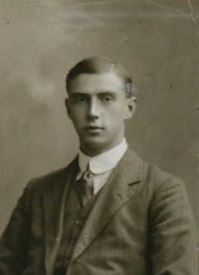 Leslie Falconer MacDonald was born on 12 March 1890 in Bristol, the son of James Turriff MacDonald and Olivia Maria MacDonald (née Pingstone). He gained his RAeC Aviator's Certificate on 15 November 1910 on a Bristol Boxkite at Brooklands, the first to obtain his Certificate on a Bristol. Almost immediately afterwards the British and Colonial Aeroplane Co arranged for a special mission to Australia, the team consisting of Macdonald, Sydney E Smith, the Company's manager, pilot Joseph Hammond and a staff of mechanics. The tour started on 3 January 1911 in Perth, Western Australia, finishing on 9 May in Sydney, New South Wales.
Returning to England he was engaged by Vickers to test their machines. On 13 January 1913 MacDonald, together with his passenger, mechanic Harold England, left the Vickers flying ground near Dartford for a short trial flight in a 70 h.p. Vickers monoplane when, after they had flown for a few minutes at a height of a few hundred feet, trouble with the engine caused them to make a rapid descent and he was forced to ditch in the Thames near Erith. The monoplane floated for about one minute and one man was seen climbing along the wing before the machine sank. He then swam a few yards and disappeared. This was presumably England, for MacDonald was unable to swim and evidently went down with his machine.
 Richard Talbot Snowden-Smith was born on 23 April 1887 at St Austell Cornwall, the son of James Snowden Smith and Frances Mary Flamstead Smith (née Walters). He was educated at the Royal Military College Sandhurst and commissioned as a 2nd Lieutenant into the Middlesex Regt, Army Service Corps on 29 August 1906, promoted to Lieutenant on 29 August 1909. He was made Inspector of Subsidised Transport Vehicles on 11 August 1912.
Snowden-Smith learned to fly at the Blondeau School at Brooklands and gaining his RAeC Aviators Certificate on 15 November 1910 flying a Farman biplane. This was Blondeau's second pupil to win his Certificate at Brooklands and, along with Captain J D B Fulton, who gained his the same day, was one of the first two British officers on the Active List to pass for his certificate.
Although he participated in many trials before World War One, including the Brooklands to Brighton Air Race, Snowden-Smith remained a career soldier and appears to have participated little in aviation following the outbreak of World War One. He was promoted to Captain on 5 August 1914 and appointed as a Staff Captain to the War Office on 3 March 1915. He was appointed Deputy Assistant Director of Supplies and Transport at the War Office, with temporary rank of Major, on 22 July 1916, and then promoted to the rank of Brevet Major on 3 June 1917. He was appointed Assistant Director, with the temporary rank of Lt.-Colonel, on 12 December 1917, Deputy Director, with the temporary rank of Colonel, on 20 January 1919 and finally to Assistant Director of Supplies and Transport 13 March 1919, returning to his temporary rank of Lt.-Colonel.
Snowden-Smith was appointed an Officer of the Most Excellent Order of the British Empire (OBE) on 5 June 1919. He relinquished his temporary rank of Lt.-Colonel on 1 December when appointed Assistant Senior Inspector of Motor Transport, a post he relinquished on 27 March 1922, returning to the Establishment of the Royal Army Service Corps. In 1922 he became an Associate Member of the Institute of Mechanical Engineers.
Snowden-Smith was promoted to Major on 26 January 1925 and was appointed Deputy Assistant Director of Transport QMG Branch, AHQ, Simla, India, where he was also Secretary of the Mechanical Transport Advisory Committee during 1925. He returned to England to become Chief Instructor at the Royal Army Service Corps Training College, Aldershot, on 24 September 1926. He was promoted to Brevet Lt. Colonel on 1 January 1927.
Snowden-Smith was once again appointed Deputy Assistant Director of Supplies and Transport at the War Office on 1 March 1931. He was promoted to Lt.-Colonel and appointed Commanding Royal Army Service Corps Depot, Feltham on 14 April 1933, then appointed Assistant Director of Supplies & Transport at the War Office on 1 September 1934 and promoted to Colonel, with seniority from 1st January 1931. He was appointed Inspector of Royal Army Services Corps at the War Office, with the temporary rank of Brigadier, on 14 June 1937, further promoted to Major-General on 2 February 1938, with seniority from 8 January.
Appointed Director of Supplies & Transport, War Office on 15 May 1940 and made a Companion of the Order of the Bath (CB) on 30 December 1941, Snowden-Smith retired on 26 June 1943.
Major-General Richard Talbot Snowden-Smith, CB, CBE, MIMechE died in on 14 August 1951 in Marylebone, London.
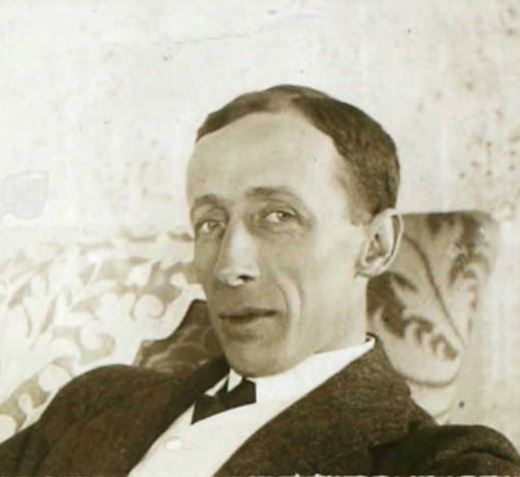 Horatio Claude Barber was born in Croydon on 11 September 1875 at Thornton Heath, Surrey, the son of Charles Worthington Barber and Isabella Barber (née Loughborough).
Lauded as one of Britain's aviation pioneers, which he undoubtedly was, his early life was much more that of a charlatan and con man. Educated at Bedford Modern School from 1891 to 1892, he left the UK soon after finishing school, but his whereabouts until 1896 are unrecorded. Barber's older brother George had settled in Kalgoorlie, Western Australia in 1895. In 1896 he was appointed the new medical officer at Kalgoorlie hospital, and one H C Barber was appointed secretary, presumably Horatio. On 3 December 1897, H C Barber resigned his post as secretary with the intention of moving to British Columbia, Canada.
Barber arrived in England on 3 February 1898, and then travelled on to Canada. From then until 1903 he appears to have spent most of his time on the Canadian or American west coast. In 1903, it appears Barber was operating a swindle in California, offering to teach farming to young Englishmen. However, he disappeared in December, leaving behind creditors and his young 'students' stranded, in debt and without work.
Barber moved on, finally ending up in York, Ontario, Canada. Silver had been discovered in Cobalt, northern Ontario, and the buying and selling of stocks in these mines had become big business. Barber formed a company in 1905, Incorporation and Securities Company of Canada, most likely to help clients with financial transactions on the stock market. In 1906 he went to Cobalt where he opened the Cobalt Open Call Mining Exchange. Barber was then given as the 'Fiscal Agent' for The Hudson Bay Extended mine, a wildcat mine that produced nothing. By now, Barber was promoting himself as a stockbroker, director and secretary, fiscal agent, organizer and mine operator.
In September 1906 Barber incorporated Canadian Mines Ltd, with plush offices in Toronto. One of the mines that the company promoted, alongside established successful ones, was wildcat mine named the Abitibi and Cobalt Mining Company. Typically unable to supply shares in the more established mines, Barber would push shares of the effectively useless A & C Mining Company.
Barber left Cobalt rather suddenly in October 1906 and opened a branch of Canadian Mines Ltd in Larder Lake, where gold had been discovered. There he began promoting another wildcat mine, the Larder Lake Proprietary Gold Fields Ltd. However, little gold was ever produced by the mine and it went into liquidation in January 1909.
Once again Barber disappears. In July 1907 his wife and children sailed from Canada to England, Barber apparently not with them. It is possible that te family stayed in Greece for some time, but Barber does not reappear until December 1908, when he visited the Paris Salon de L'automobile, where aeroplanes were also exhibited. Exactly when Barber became interested in aeronautics is unknown, but it must have been before the Paris Salon, as on 27 January 1909 he applied for a patent (GB190901999A) on a method of stability by adjusting wing dihedral, granted on 25 November.
Barber returned to England, where he found a suitable workshop in some disused railway arches at Battersea and there began construction but, lacking engineering knowledge, entrusted the work to a consulting engineer, Howard Wright. Barber leased a plot of land from the War Office at Larkhill, on Salisbury Plain, where he built a shed, completed by May 1909 at the latest. The monoplane was completed and delivered to Larkhill in the first week of June 1909.
Meanwhile, the Aeronautical Syndicate Ltdhad been formed in the preceding April. The directors and only shareholders at that time were Charles Worsley Battersby and Herman Rudolph Schmettau. The former was a stockbroker of the partnership of R C May and Battersby and the latter a solicitor of the firm of Hays, Schmettau and Dunn, who appear to have acted for Barber and provided him with a poste restante address at that time. Barber was the Syndicate's general manager but he never became a shareholder. At the formation of the company Barber sold it his patents, monoplane and hangar, by which it might be inferred that the Syndicate provided him with the finance necessary for him to continue his experiments.
By March 1910 his designs were making successful flights and in September 1910 the Syndicate became the first occupant of the sheds newly erected at Hendon flying field; there Barber gained his RAeC Aviators Certificate on 22nd November of the same year, flying a Valkyrie Monoplane.
On 4 July 1911 the Valkyrie B was used to transport the first air cargo in Britain (a box of Osram lamps). In late 1911 a School for Aeronautical Engineers was opened at Hendon Aerodrome, with Barber as technical chief. This seems to have been relatively short lived, though the facility remained open after ASL had closed.
Early in 1912 the twin-propeller Viking biplane was built, which was to be the last of Barber's designs. In February he became the first Associate Fellow of the Aeronautical Society. He continued his research and experimental work for a few months but in April 1912 withdrew from active aviation due to increasing costs. The company's aircraft and spares were to have been auctioned on April 24, but that was pre-empted by Frederick Handley Pagewho paid cash for all the assets of ASL.
That same year Barber had tried to insure himself against any liability from passengers of his aircraft, but this was unknown at the time and Lloyd's asked him to write his own policy, the first aircraft insurance policy. From then until the war he was engaged as a consultant on both aviation engineering and insurance, and had a large practice which included members of Lloyd's whom he advised on all questions relating to aircraft insurance. On the engineering consultancy side, he is thought to have initiated the design of the Grahame-White Type VI, the design of which was completed by J D North, who had worked for ASL before moving to Grahame-White.
Late in 1912, Barber visited Constantinople (Istanbul), viewing first-hand the First Balkan War. On 5 April 1913 he had his first lesson towards an Airship Pilot's Certificate, though was never to gain the certificate itself.
Following the outbreak of WWI, Barber was commissioned as a 2nd Lieutenant (on probation) in the Royal Flying Corps Military Wing on 12 August 1914, and appointed Flying Officer. Initially posted to 3 Reserve Aeroplane Squadron, he was confirmed in rank in October and posted to the newly formed 14 Squadron at Shoreham on 3 February 1915. Promoted to Lieutenant on 16 March, he was appointed Engineering Officer (Grade 1), with the temporary rank of Captain, on 18 March 1915, and promoted to Captain on 1 September. Barber left 14 Squadron when it embarked for Egypt on 7 November, and was transferred to a Reserve Aircraft Park. Found unfit for General Service for a great deal of 1916, he was transferred to ASRN (SAD) in May 1916 as Officer in Charge of Officer Instruction, and then to 1 School of Aeronautics, Reading, in July. Finally he was posted to the Central Flying School at Upavon on 29 January 1917 as an instructor in theory and construction.
On its formation on 1 April 1918, Barber received a temporary commission in the RAF with the rank of Captain, but he relinquished his commission on 11 February 1919 due to continuing ill health.
In 1917 Barber published a book The Aeroplane Speaks and in 1927, Aerobatics. In 1919 he joined the Aviation Insurance Association as a consultant and from 1919 to 1921 was Chairman of Lloyds Technical Committee for Aviation.
In 1922 Barber returned to the USA, where he formed Barber and Baldwin Inc., with Robert H Baldwin, Brooks Parker and Archibald Black, the first underwriting agency in the USA to specialise in aircraft insurance. He then set up the Aero Underwriters Corporation in 1928, including its two subsidiaries, the Aero Indemnity Co. and the Aero Insurance Co. By 1929 he was chairman of the Insurance Brokers division of the Aeronautical Chamber of Commerce of America Inc, and had parted company with Barber and Baldwin.
In 1930, Barber and his family moved to Jersey, the Channel Isles, and from December 1933, when he bought a house in St. Helier, was effectively in retirement. On the outbreak of WW2, he returned to England. In September 1940 he moved to Bermuda and travelled considerably to the American and Canadian west coasts. The family returned to St. Helier in the immediate post war period.
In 1947 he travelled to St. Kitts and Nevis, where he bought an old hotel, which became the Bath Hotel. He bought other adjacent parcels of land and organised the Leeward Islands Development Co. Ltd., intent on developing a luxury hotel complex. Unfortunately the Barbers time on the island eventually became confrontational with residents and the family moved to Bermuda in 1952. Eventually the family returned to Jersey.
Horatio Claude Barber died in St Helier, Jersey, the Channel Isles, on 6 July 1964.