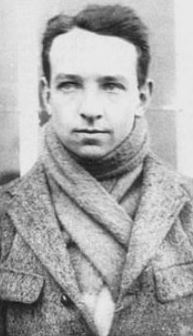
 Thomas Octave Murdoch Sopwith was born on 18 January 1888 in Kensington, London, the eighth child and only son of Thomas Sopwith and Lydia Gertrude Sopwith (née Messiter). He was educated at Cottesmore School in Hove and at Seafield Park engineering college in Hill Head.
When he was ten years old, on 30 July 1898 whilst on a family holiday on the Isle of Lismore, near Oban in Scotland, a gun lying across young Thomas's knee went off, killing his father. This accident haunted Sopwith for the rest of his life.
His first business project on leaving college was to set himself up, in partnership with Phil Paddon, a boyhood friend, as a consultant to the fledgling motor trade. Later they opened a showroom at 1 Albemarle Street, off London's Piccadilly, and sold Rolls-Royce cars. A combination of business success and the inheritance left him by his father allowed Sopwith to follow many interests - yachting, speedboats and a little motor racing. In November 1904 was the 'Hatfield 100 Mile Reliability Trial', an event held for three-wheelers, which he won in a Pearson, beating nine older and more experienced drivers. On 27 September 1906 he was the youngest driver in the Isle of Man Tourist Trophy Race when he competed in a two-cylinder Peugeot belonging to Charles (later Sir Charles) Friswell.
By the time Sopwith was in his teens the sport of ballooning was well established and fashionable, and his first ascent was in C S Rolls' balloon Venus on 24 June 1906. Together with Phil Paddon he bought his own hot air balloon from Short Brothers, which they named Padsop. On 8 September 1906 he made a two-and-a-quarter hour flight from Chelsea to Eynsford, Kent. With him, as passenger, was Claude Grahame-White.
In 1910, Sopwith and his friend V W Eyre, bought a 166-ton schooner called Neva that at one time this had belonged to Princess Henry of Battenberg. Wishing to add a motor, they enlisted the help of Fred Sigrist, who worked at the Parsons' Motor Company in Southampton.
Sopwith became interested in flying after hearing of American John Moisant flying the first cross-Channel passenger flight. Sopwith went to Brooklands where he paid £5 for being given two circuits over the racetrack with Gustave Blondeau in a Farman. His first aeroplane, which he bought new for £630, was a Howard T Wright Avis monoplane. Although he had had no previous instruction, after taxying around, he flew his Avis at Brooklands on 22 October 1910, covered 300 yards, then pulled back on the stick, raised the nose too high and, while trying to land, stalled and caused serious damage to the Avis in the ensuing crash. He soon improved, and on 22 November was awarded his Royal Aero Club Aviator's Certificate, flying his own Howard Wright Biplane at Brooklands.
Although he had only ten hours solo flying experience, on 24 November Sopwith flew non-stop over a closed circuit for a distance of 107 miles which he covered in 3 hours 12 minutes, winning the Michelin Cup for the longest non-stop flight by a British pilot in a British machine. On 18 December 1910, Sopwith won a £4000 Baron de Forest prize for the longest flight from England to the Continent in a British-built aeroplane, flying 169 miles in 3 hours 40 minutes. In doing so he became the sixth pilot to cross the English Channel.
In 1911 Sopwith bought a Martin and Handasyde Type 4B monoplane with a 50-h.p. Gnome rotary engine, and then he acquired a 70-h.p. Blériot monoplane in France. William R Hearst, the famous American newspaper proprietor, inspired a competition for the first east-west trans-American flight, starting from New York, so in early 1911 Sopwith set up a team to travel to America, with Dudley Sturrock as manager and Fred Sigrist looking after the maintenance with Harry England and Jack Pollard, another early pioneer who had only recently been employed at the Howard Wright Company. The Blériot and the Howard Wright biplane were shipped out while Sopwith and his sister May crossed on another liner.
The Blériot was made ready at Hempstead Plains airfield on Long Island, but the following day Sopwith crashed at Mineola in severe turbulence while taking Nelson Doubleday of the famous publishing firm for a flight. Fortunately, neither was seriously injured. Sopwith, being a man of means, immediately ordered another Blériot from France, but, meanwhile, the Howard Wright biplane had arrived and on it he gave one outstanding performance after another. The Sopwith team continued to travel around the country for most of 1911, making exhibition flights and participating in several aviation meetings, winning some prize money, but the transcontinental flight was not attempted. At Chicago Sopwith won $14,000 in prize money and at Boston, together with Claude Grahame-White, he took most of the prizes on offer. At one point during the tour, the Wright brothers filed a Bill of Complaint in the court, aimed at preventing Sopwith from further flights in America on the grounds that his British-designed-and-built Howard Wright biplane infringed their patents. The relationship was put on a friendly basis after Sopwith ordered an American Burgess-Wright machine.
The Sopwith party returned to England in October, with the Blériot following. It was accompanied by the new Burgess-Wright biplane and the components of the Howard Wright that had been wrecked after engine failure forced a landing off Manhattan Beach. The American competitions were a happy venture for Sopwith. He had won a large, appreciative audience, had competed against some of the finest pilots in the world and, on many occasions, won. He had broadened his flying experience and his substantial winnings were able to recharge his flagging bank balance.
The money that Sopwith won during the various competition flights in Europe and the USA enabled him to set up the Sopwith School of Flying, started at Brooklands in February 1912 and offered a greater range of instructional machines than any other similar institution. The two-seater Blériot was own alongside the Howard Wright monoplane, which had been rebuilt, the Burgess-Wright biplane that was modified for instructional work and the Martin and Handasyde monoplane. These were later joined by a Henri Farman biplane. F P Raynham was hired as instructor and this enabled Sopwith to pursue both his competition interests. When Raynham later left to join the firm of L H Flanders, his place was taken by E W Copland Perry. In charge of the aeroplanes at the Sopwith School was Fred Sigrist, for whom Australian Henry Kauper worked as a mechanic and he introduced Sigrist to his fellow Australian Harry Hawker, who was then engaged to work on the Sopwith-Wright biplane.
By 1912 Sopwith had decided to stop giving flying instruction or entering air competitions in order to concentrate on establishing himself in an industry which he believed would, apart from its sporting aspects, have a major role to play in travel, commerce and warfare. Sopwith had been encouraged in such an aim during the year when he had own two aircraft built by Coventry Ordnance Works, in part of the Military Trials in August Larkhill to decide on suitable aircraft for the RFC. They were so unsuccessful - one engine would not run at all - that he became convinced he could do better himself.
A first attempt at aeroplane construction was made, and on 4 July 1912 Sopwith took to the air in the Sopwith-Wright biplane. The machine, constructed under Sigrist's supervision, was intended for instructional work, and Sopwith soon demonstrated its ability to carry two passengers. With the success of the hybrid School Biplane behind him, Sopwith decided to abandon flying tuition and concentrate on aircraft manufacture. Premises were needed and in December an empty skating rink at Kingston was acquired. The Sopwith Company, as it was first known, was thus established some 7 miles from Brooklands, to where its future products could be taken for assembly and test-flying. The first designs of the new company were a three-seater biplane and a flying boat.
In March 1914 the fledgling company was registered as a limited liability company, with the name The Sopwith Aviation Company Ltd. Following the outbreak of WWI, more than 130 examples of the Sopwith Tabloid were ordered and used for scouting by both the Royal Flying Corps and the Royal Naval Air Service. It was the forerunner of some very successful Sopwith fighters and probably the earliest single-seat, tractor type fighter in the world. The company went on to produce more than 18,000 World War I aircraft for the allied forces, including 5747 of the Sopwith Camel single-seat fighter.
The Ministry of Munitions had concluded, in July 1917, that aircraft production could be made more efficient if it was centralized. This led to the idea of National Aircraft Factories (NAF) where machines could be produced on a massive scale under government direction and control of raw materials and components. National Aircraft Factory No. 3 was planned for Richmond and Sopwith was asked to manage it. He was, however, a believer in private enterprise and recognized the potential problems of state intervention. Consequently, he declined the offer and events proved him correct.
Sopwith was appointed Commander of the Most Excellent Order of the British Empire (CBE) in 1918 New Year's Honours, but the Armistice brought reductions and cancellations of orders and Sopwith's turned its attention to the potential civil market, both at home and overseas, but could do little in the face of competition from the large stocks of cheap war-surplus machines that were available. Diversification seemed the only answer and the firm was re-registered as the Sopwith Aviation and Engineering Company Ltd, reflecting its intended production of ABC motorcycles and car bodies. The company might have survived in this form, had it not received a massive and cruel bill for Excess Profits Duty from the Treasury. Sopwith decided that voluntary liquidation was the only answer, but first ensured that all of the company's creditors were paid in full. The works at Kingston and Ham were closed, effectively from 3 September 1920.
Less than six weeks later, Sopwith was back in business, but his new company did not bear his name. In making a fresh start, it was considered wiser to sever links with the liquidated company and so the H G Hawker Engineering Company Ltd was registered on 15 November 1920. Sopwith was chairman of the Hawker companies, the original name being changed, more appropriately, to the Hawker Aircraft Company in 1933. He went on to create the Hawker-Siddeley Aircraft Company, which was an amalgamation of some of the great companies in British aviation - Hawker, Armstrong Siddeley, Armstrong Whitworth and A V Roe.
In 1927 Sopwith commissioned yacht builders Camper and Nicholsons to build a luxury motor yacht he named Vita. She was sold in 1929 to Sir John Shelley-Rolls who renamed her Alastor. During World War II the Royal Navy commandeered her to ferry provisions to Navy vessels moored at the entrance to Strangford Lough. In 1946 a fire gutted her and she sank in Ringhaddy Sound in Strangford Lough. Sopwith challenged for the America's Cup with his J-class yachts, Endeavour, in 1934, and with Endeavour II in 1937. Both yachts were designed by Charles E Nicholson. Sopwith funded, organised and helmed the yachts. He did not win the Cup but he became a Cup legend by nearly winning it in 1934. He was inducted into the America's Cup Hall of Fame in 1995. In 1937 Sopwith received the yacht Philante, also built for him by Camper and Nicholsons. At 1600 tons, it was the largest private diesel yacht ever built in the UK. During the War the ship was requisitioned by the Royal Navy and used as a convoy escort vessel, HMS Philante. After the war the vessel was returned to Sopwith and he sold her to Norway in 1947, to be used as a royal yacht for the Norwegian king.
Appointed Knight Bachelor in the 1953 Coronation Honours for his services to British aviation, Sopwith was an active chairman of the Hawker-Siddeley group until his retirement in 1963. After the nationalisation in 1977 of the aviation interests of Hawker-Siddeley, he continued to work as a consultant to the company until 1980.
Sopwith's 100th birthday party was held at Brooklands, scene of his earliest flying exploits, but it was decided that he should remain at his home, Compton Manor in King's Somborne, Hampshire, where a small family gathering would be held.
Sir Thomas Octave Murdoch Sopwith, CBE, Hon FRAeS died on 27 January 1989 in King's Somborne, Hampshire.
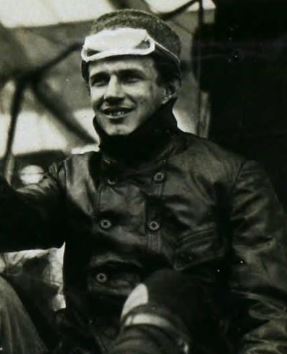 Joseph Joel ('Joe') Hammond was born in Fielding, in the Manawatu District of the North Island of New Zealand, on 19 July 1886, the son of Joseph Penny Hammond and Mary Hammond (née Campion). He attended Campbell Street School in Palmerston North, then, during 1899-1901, St Patrick's College, Wellington.
Hammond left New Zealand, likely in late 1904, travelling first to Australia, where he worked on a sheep station, then reputedly as a prospector in the Klondike and a trapper in Alaska. He spent much of 1905 in Phoenix, Arizona, working on a cattle ranch before leaving the United States on 20 November, returning to either Australia or New Zealand.
In 1908, he returned to the Americas, sailing from Sydney, via Fiji and Hawaii, arriving in Vancouver, Canada, on 9 April. He travelled south to the USA and it must have been during this time that he joined William F. Cody, aka Buffalo Bill. Codys final European tour had ended in 1907 and, in 1908, he and Pawnee Bill, another showman, joined forces and created the ""Two Bills"" show. This would presumably have been the show Hammond became involved with.
Later in 1908, Hammond left Cody and toured much of Europe, apparently using as a base the East Sussex seaside town of Seaford and on 19 November 1909 married local Seaford girl Ethelwyn Wilkinson. In France, shortly after his marriage, Hammond had received some flying tuition from renowned pilot Léon Delagrange, probably at Reims and when, in July 1910, Hammond attended the second of the famous annual Reims flying meetings, it rekindled his desire to fly. Instructed by Henri Molla at the Sanchez-Besa school at Mourmelon (Camp de Châlons), Hammond gained his Aéro-Club de France Aviator's Certificate, No 258, on 4 October 1910, flying a Sanchez-Besa Biplane. Returning to England, he gained his RAeC Aviator's Certificate on 22 November 1910, flying a Bristol Boxkite at Salisbury Plain.
Hammond was hired by the British and Colonial Aeroplane Co and almost immediately afterwards they arranged for a special mission to Australia, the team consisting of Hammond, Sydney E Smith, the Company's manager, pilot L F Macdonald, and a staff of mechanics. They arrived in Fremantle on December 13, 1910 and transferred to Perth. The aeroplane used for the first flight, Boxkite No 10, was assembled at Belmont Park Racecourse during the last day of 1910, and there that the first flight of a heavier-than-air machine in Western Australia took place on January 3, 1911 with Hammond piloting a Bristol Boxkite. Hammond made a final flight in Perth on January 12, 1911, after which the aircraft was dismantled and crated for shipment to Melbourne.
In Melbourne the team was hoping to interest the Commonwealth Government in purchasing planes for military reconnaissance. Had this been successful, the company had intended establish a factory in Melbourne to build the planes. They selected the site at the rear of Altona House as their flight headquarters and on 18 February 1911, Hammond undertook his first flight in Victoria. On 20 February 1911, flew from Altona to Geelong and landed on the Geelong Racecourse, taking 55 minutes to cover 42 miles, the following day returning back to Altona, the first cross country flights in Australia. Another "first" accolade was achieved when Hammond flew around Altona for 12.4 miles with his wife as a passenger on 23 February. On 2 March, two new records were established. A Melbourne businessman, M H Baillieu, paid to be taken for a flight. This was the first paid charter flight and the first carrying an Australian citizen as a passenger. Public demonstrations followed as well as numerous other flights before Hammond moved on to New South Wales where on 18 April 1911 Hammond made the first ever flight in Sydney, flying from the Ascot Racecourse, Mascot. The Bristol tour ended in May 1911, but the Hammonds remained behind in Australia.
Hammond and his wife left Sydney in May 1912, returning to England by way of Vancouver and New York. He continued working for the British and Colonial Aeroplane Co. until August of that year, when he was hired as an instructor at the Eastbourne Aviation Co.'s School under Frederick Bernard Fowler. On 26 February 1913, Hammond joined the Royal Flying Corps (Military Wing), Special Reserve of Officers, with the rank of 2nd Lieutenant (on probation).
The end of the year saw him once again in New Zealand. A Blériot XI-2 had been presented to the New Zealand Government by the Imperial Defence Committee at Hendon in June 1913. Christened Britannia by Lady Desborough on 22 May 1913, the machine was shipped to New Zealand, Hammond being hired to give demonstration flights. The Blériot arrived at Wellington on 29 September, minus propeller, and was fully erected in Auckland on 7 January 1914. Hammond made his first flight on 17 January from the Epsom showgrounds, but the New Zealand government soon decided it had no further use for the aircraft and Hammond returned to England.
In March 1915 Hammond was confirmed in his rank of 2nd Lieutenant, being promoted to Lieutenant the next month, this later antedated to 26 November 1914. In January 1916 he was promoted from Flying Officer to Flight Commander with the rank of Captain. On 19 January 1917 he was taken on by Bristol as their first full time test pilot. There, he tested the first F.2B, A7101, on 10 April that year.
On 27 March 1918 Hammond left from Liverpool bound for New York as part of the British Air Mission to the United States, assisting with the planned production of the F.2B by Curtiss as the O-1. On 22 September, returning to Indianapolis from the Fourth Liberty Loan War Bond Drive air display at Greenfield, his Bristol Fighter F2B entered a right hand spin from 600 feet, its left wing striking a tree before crashing in a cornfield of the Marion County Poor Farm near its boundary with the Indianapolis Speedway. Hammond was killed outright. Civilian J L Kinder was also killed and Lt R W Pickett of the USAAS severely injured.
At the funeral, Hammonds coffin was draped with an American and British Flag and was attended by US and British soldiers, including a firing squad of American and British aviation officers. Thousands of citizens attended the ceremony, at which the Bishop of Indianapolis officiated. Hammond was cremated and his remains were then stored in the family mausoleum of Carl Fisher who was the founder of the Indianapolis speedway. Carl Fisher had graciously temporarily donated his own plot in the mausoleum until Hammonds family could come and claim the remains after the war. Hammond's remains were never collected and still reside in Carl Fishers mausoleum, Crown Hill cemetery, Indianapolis.
At the time of his death Joseph Hammond was the longest serving New Zealand pilot in the British services. He was thirty-one years old.
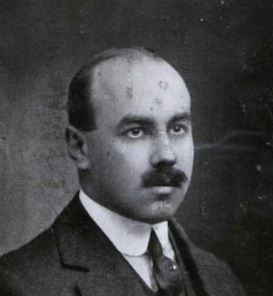 Sydney Ernest Smith was born on 24 April 1881 at Farnham, Surrey, the son of William George Smith and Georgina Smith (née White). Trained as a Civil Engineer, he joined the Bristol Tramways and Carriage Co., owned by his uncle Sir George White. Smith was also a Captain in the 3rd Volunteer Battalion, The Gloucestershire Regiment (this becoming the 6th Battalion, Gloucestershire Regiment on 1 April 1908).
When the British and Colonial Aeroplane Company was founded in February 1910, also by Sir George White, Smith was appointed manager. He gained his RAeC Aviator's Certificate on 22 November 1910, flying a Bristol Boxkite at Brooklands. Almost immediately afterwards the British and Colonial Aeroplane Co arranged for a special mission to Australia, the team consisting of Smith, Leslie Macdonald, Joseph Hammond and a staff of mechanics. The tour started on 3 January 1911 in Perth, Western Australia, finishing on 9 May in Sydney, New South Wales.
At the beginning of the First World War Smith rejoined his old battalion with the rank of Major. In 1915 he was attached to the Royal Flying Corps, and made Equipment Officer at the Reserve Aircraft Park, Farnborough, on 22 October. In March 1916 he moved to 3 Army Aircraft Park as Squadron Commander and on 14 September he was promoted to Lieutenant-Colonel as Depot Commander of the Northern Aircraft Depot. On 1 January 1918, he transferred to the command of the 1 Aircraft Depot.
On its formation on 1 April 1918, Smith received a temporary commission in the RAF with the rank of Colonel, but was put on the unemployed list on 18 March 1919. In June 1919, he was appointed Commander of the British Empire (CBE).
Smith was a director of the Imperial Tramways Company between 1926 and 1930 and a director and general manager of the Bristol Tramways and Carriage Company until he retired in 1935. He was also a director of the Bristol Aeroplane Company and a member of the stockbroking firm of George White and Co (also founded by Sir George White) until his death.
Colonel Sydney Ernest Smith, CBE, died at the Bristol Royal Infirmary on 11 June 1943.
 Archibald Reith Low was born on 31 December 1878 in Aberdeen, the son of George Duncan Low and Jane Stuart Low (nee Reith), and brought up with four brothers and three sisters at the Manse at Fountainbridge, Edinburgh, where his father was Minister of the Church of Scotland. He was educated at Watson's and, after one year at Edinburgh University where he studied Latin, Greek, French and Mathematics, he spent two years at Clare College, Cambridge. In 1901 he enlisted in the City and Imperial Volunteers, intent on fighting in the Boer War, gaining the rank of 2nd Lieutenant of Infantry. However, as he was embarking, news came that the Boer War was over. Not long after, the City and Imperial Volunteers was largely disbanded and Low returned to Clare College for another two terms.
Long before university days, Low had determined to be an engineer by profession, so after Cambridge he gained an engineering apprentice in a Glasgow factory. He was, however, not an apprentice for long. After a period during which he concentrated on electrical engineering he accepted a position of senior assistant to Frederick Handley Page in the electrical firm of Johnson & Phillips. When Handley Page left, Low was given his job, but soon resigned to become a consultant.
Having become acquainted with the work of German aerodynamicists, he turned to practical flying and joined the Farman school at Étampes, learning to fly in July and August 1910. Through a fellow pupil he became acquainted with Sir George White, who invited him to join the Bristol Flying School at Brooklands as manager, and himself gained his RAeC Aviator's Certificate there on 22 November the same year, flying a Bristol Biplane. Recognising his mathematical ability, in 1911 Bristol moved him to join George Challenger in the design department where they designed the unsuccessful Bristol Monoplane in 1911.
Low's tenure at Bristol was not to last long as he was recruited in 1911 by H F Wood to join Vickers as Chief Designer of a newly formed Aviation Department, the two being already acquainted as Wood had been a pupil of Low's at Brooklands. There he was involved in the redesign of a French R.E.P. monoplane into the first Vickers aircraft and was involved with many Vickers designs up to the E.F.B.3, but the relationship between Low and Woods was never good Low was not given a free hand as Chief Designer of Vickers Aviation and in October 1913 there was a boardroom meeting at which arose sharp disagreements, leading to an acrimonious exchange of words. This led to a demand for his resignation which amounted to a peremptory dismissal.
There followed a somewhat ineffective period of private designing of various types of aeroplanes and gliders and a serious study of seaplane techniques.
Following the outbreak of WWI, Low was awarded a commission in the Royal Naval Volunteer Reserve as a Lieutenant, and posted to HMS Engadine in the Dardanelles as Senior Technical Officer RNAS, Mediterranean Fleet.. This was followed by a posting to HMS Ben-my-Chree, before he was ordered to report to the Air Department of the Admiralty at home in England.
Transferred to the RNAS and promoted to Lieutenant Commander, Low joined 'D' Section of the Air Department on 5 September 1916. He was posted to 'D' Flight at the Isle of Grain on 12 October, then returned to the Air Department on 12 March 1917, where he was involved in a variety of technical appointments.
On its formation on 1 April 1918, Low received a temporary commission in the RAF with the rank of Captain (acting Major), but was transferred to the unemployed list on 11 July 1919
From 1919 Low was Chief Librarian at the Air Ministry, devoting nearly all his time to research. For the next twelve years he disappeared into the backroom. Several periods were spent at the RAE, Farnborough. In 1932 he was sent to East Anglia as Senior Technical Officer of the RAF Bombing Station at Orfordness. In 1938 came a transfer to the RAE for work in the senior bracket of the Directorate of Technical Development. In early 1939, before the outbreak of the Second World War, he was retired as a Civil Servant.
When WW2 broke out he offered his services again, but was turned down, so in late 1940 he emigrated to Canada. He soon found work in a munitions factory near Toronto where he spent about a year in various laboratories perfecting tracer-bullet techniques. In due course he found himself a scientific adviser to the Canadian Government War Department. In 1949, at the age of 71, he retired for the second and last time and he and his wife returned to England.
In 1950 he and his French-Swiss wife Lina Cécile retired to Verbier in the Swiss Alps and later they lived on the outskirts of Zurich, though he would spend 4 to 6 months a year in England. His great passion was mountaineering, climbing the Matterhorn, and many less, equally or more ferocious mountains, until well into his seventies. The last great climb was probably the Fischerhörner, 14,800 feet, at the age of 72.
Major Archibald Reith Low, MA, FRAeS died on 21st January 1969.
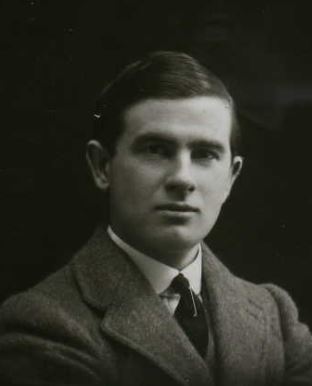 Robert Cooke Fenwick was born on 6 October 1882 in South Shields, Westoe, Durham, the son of Robert Cooke Fenwick and Rebecca Phillips Cooke (née Mitchelson). He was educated at South Shields High School between 1893 and 1895, leaving to go to school in Jersey.
After leaving school, he became an aircraft designer. He worked as assistant to W P Thompson at Freshfield Aerodrome near Liverpool, Lancashire, who had formed Planes Limited in 1909 to develop a patented 'pendulum stability' aircraft, the manufacture of which was contracted to Handley Page at Barking. Fenwick redesigned the aircraft for Handley Page, replacing metal structure with wood, as the Handley Page Type B.
After the aircraft's undercarriage failed on testing in October 1909, and further damage caused when the shed housing it collapsed in a gale, Fenwick rebuilt the machine and delivered it to Thompson in September 1910, the aircraft now becoming the Planes biplane. Fenwick taught himself to fly on this machine and gained his RAeC Aviator's Certificate on 29 November 1910 flying it at Freshfield Aerodrome.
With Sydney T Swabey, Fenwick next designed the Planes monoplane, named Mersey. In May 1912, Fenwick and Swaby set up the Mersey Aeroplane Company, which bought the Mersey from Planes Ltd. The aircraft competed in trials at the British Military Aeroplane Competition, on Salisbury Plain, in 1912.
On 13 August 1912, Fenwick lost control of his Mersey monoplane and it crashed, killing him in the process.
 Andrew George Board was born on 11 May 1878 in Westerham, Kent, the son of John Board and his wife Mary Elizabeth Board (née Pyne).
Following a time in the militia, Board was commissioned as a 2nd Lieutenant in the South Wales Borderers on 18 April 1898, serving in India and South Africa. He was promoted to Lieutenant on 20 May 1903 and to Captain on 9 June 1909.
In 1910, at his own expense, Board learned to fly at Hendon and gained his RAeC Aviator's Certificate on 29 November 1910 flying a Blériot monoplane.
On 18 April 1913, Board was seconded to the RFC, graded as Flying Officer. Appointed Flight Commander on 1 March 1914, he transferred to the Central Flying School at Upavon, Wiltshire, on 1 May as an instructor. On 9 September he was promoted to temporary Major, graded as Squadron Commander.
On 28 September 1914 Board became Officer Commanding 7 Squadron RFC at Netheravon and confirmed in the rank of Major at the end of the year, before moving to the western front in April 1915 to command 5 Squadron. On 24 March 1916 he returned to England and was made Wing Commander in charge of 7 (Training) Wing Gosport. Promoted to Lieutenant Colonel, he assumed command of 20 (Reserve) Wing at Aboukir on 15 September 1916 (which became 20th (Training) Wing on 31 May 1917), then on 4 June 1917 assumed temporary command of the ME Brigade. On 1 January 1918 he was appointed a Companion of the Distinguished Service Order (DSO) for distinguished service in the Field and on 1 January 1919 the Companion of the Order of St Michael and St George (CMG) in recognition of distinguished services rendered during the War.
On its formation on 1 April 1918, Broad received a temporary commission in the RAF with the rank of Lieutenant Colonel and was awarded a permanent commission in the RAF on 1 August 1919 as a Lieutenant Colonel (Wing Commander when the RAF introduced its own ranking system the same day). He became Officer Commanding, School of Technical Training in December 1919. Promoted to Group Captain on 1 January 1921, he became Deputy Director of Personnel on 24 August 1922, Commandant, RAF Hinaidi on 14 September 1923, Officer Commanding, No 21 Group on 20 August 1926 and Chief Staff Officer, HQ RAF Middle East on 27 September 1927. Board was promoted to Air Commodore on 1 January 1928 before retiring at his own request on 10 September 1931. After retiring from the RAF, he spent two years in Egypt as Director of Military Aviation.
In 1939 Board re-joined the RAF as a Group Captain before retiring again in 1941. In 1943 he was appointed a Deputy Lieutenant of Caernarvon.
Air Commodore Andrew George Board CMG DSO DL died on 25 February 1973 at Morfa Bychan, Caernarvonshire, Wales.
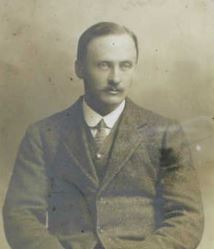 Herbert Frederick Wood was born on 12 February 1883 in Rawalpindi, Punjab, India (now Pakistan), the son of Lt. Colonel David Edward Wood and Clara Wood (née Dacres). He was educated at Harrow and the Royal Military College Sandhurst, before being commissioned as a 2nd Lieutenant with the 9th Lancers on 8 May 1901, serving in South Africa. He was promoted to Lieutenant on 14 December 1904 and to Captain on 25 April 1906.
Having returned to the UK, Wood gained his RAeC Aviator's Certificate on 29 November 1910 flying a Bristol Biplane at Brooklands. On 28 March 1911, via his friendship with Vickers director Sir Trevor Dawson, he was appointed manager of Vickers' newly-founded aviation department. Vickers had reached an agreement with French designer Richard Esnault-Pelterie, and Wood made the first flight of one of the REP monoplanes from Vickers new aerodrome at Joyce Green, near Dartford, Kent. Wood continued as test pilot for a couple of years, but from May 1913 he took on a more maagerial role.
On 3 May 1911 Wood retired from the Army and was put on the Special Reserve list with 9th Lancers on 8 October. Promoted to temporary Major in the Special Reserve on 12 November 1914, on 26 May 1915 he was appointed temporary Flight Commander in the RFC.
Major Herbert Frederick Wood died on 11 December 1918 in Marylebone, Greater London, of influenza. He was posthumously promoted to Major in the RAF on 1 January 1919.
 Cecil Compton Paterson was born 4 January 1885, in Waterloo, Lancashire, the first son of James Paterson and Jane Paterson (née Compton).
Paterson's first business interests were in motoring, forming Messrs. Paterson and Co, of Upper Hill Street, Liverpool. In late 1908, Paterson and Co was taken over by the Liverpool Motor House Company, of Peters Lane, Liverpool, with Paterson becoming a director of the latter.
As a result of his observations at Rheims and other flying meetings on the Continent, Paterson spent some eight months during 1909-1910 building an aeroplane based on the design of the Curtiss Golden Flyer, using the facilities of the Liverpool Motor House Company, the machine first taking to the air on the 14 May 1910, from the beach at Freshfield, north of Liverpool. Paterson then approached Southport town Council for help to set up an aerodrome and flying school. As the Council would not offer enough money, Paterson erected his own hangar at Freshfield. Paterson gained his RAeC Aviator's Certificate at Freshfield on this machine on 6 December 1910. A second biplane, similar to the first but a two-seater fitted with a more powerful 50-h.p. Gnome engine, was built for Gerald Higginbotham, completed in January 1911.
Paterson was aware of the limitations of his Freshfield base; in May 1911, he moved to Hendon to work for Claude Grahame-White as a flying instructor. During his time there he designed his second machine, especially designed with a view to ease of movement on the ground and being able to be dismantled and passed through a 10 foot opening in five minutes. This machine was built by Lawton's Motor Body Works, Cricklewood, and flew for the first time on 18 October 1911, from a field near the Welsh Harp.
The new aircraft was designed with Paterson's upcoming endeavours in South Africa in mind. In 1911, Paterson, along with Evelyn Frederick (Bok) Driver and Captain (later Brigadier-General) Guy Livingstone, formed the African Aviation Syndicate "to promote the science and practice of aviation in South Africa". They departed the U.K. on 11 November 1911 on the SS Garth Castle, along with the Paterson Biplane and a Blériot monoplane, for which the Syndicate held the agency in Africa. Following early demonstrations around Cape Town, The African Aviation Syndicate moved to Kimberley and established a permanent headquarters at Alexandersfontein. Plans were made for the establishment of a flying school, but disagreement between the principals forced the Syndicate into liquidation in September 1912. Paterson acquired the assets of the now defunct Syndicate and persuaded a group of Kimberley enthusiasts to finance a new scheme, and on 1 July 1913, the Paterson Aviation Syndicate was registered in Kimberley. Meanwhile, in February of 1913, Paterson had taken his biplane to Cape Town, where he modified it to a hydro-biplane. On 10 September 1913 the Government of the Union of South Africa and Paterson signed a Memorandum of Agreement whereby the Government agreed to have 10 candidate pilots trained at Alexandersfontein, the beginning of military flying training in South Africa.
Early in 1914, Paterson closed his flying school and returned to the UK, arriving on 25 March 1914 on the SS Dunluce Castle with his new wife Winifred Knight (née Beck), whom he had married on 2 March. Later that year he also formed a partnership with Captain Percy Ernest Bass (b. 1878 - d. 4 June 1937) and towards the end of 1914 the partners had arranged for S.E. Saunders to build a small flying boat, the Bass-Paterson Bat-Boat.
During WWI, Paterson reportedly became an instructor with the RFC, but does not appear to have received a commission, so possibly acted in a civilian capacity. By mid-1917 he had the position of manager of the Somerton Works of . S. White and Co Ltd the layout of which, according to Aeroplane, he had himself planned. In 1919 this factory has was taken over by Gilbert Campling, Ltd., for the manufacture of ABC designed Skootamota , Paterson remaining on as Works Manager. However, the Skootamota, an early form of scooter, was quickly imitated by competitors and, having a top speed of just 15 mph, ceased production in 1922.
Little is known of his activities after this until when, as a member of the Sailplane Club of The Model Aero Club, in August 1930, he is noted as preparing designs for two primary soaring machines. Certainly nothing came of these, and whether they were actual designs or just proposals is unknown.
Cecil Compton Paterson died on 19 October 1937 in Frognal, Hampstead, Middlesex.
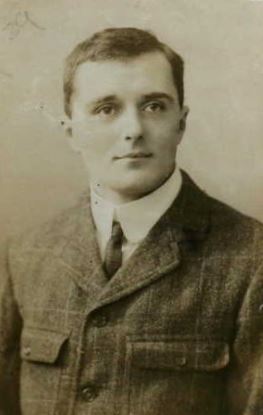 Bethell Godefroy Bouwens was born on 9 February 1884 in London, the son of Lambart Henry Bouwens and Charlotte Bouwens (née Bethell), and educated at Eton (September 1897 to August 1900) and Trinity College, Cambridge (Nat. Science Trip. pt. I class III 1906).
After leaving Cambridge in 1906 he worked for a time on experimental aircraft with various private constructors. He gained his RAeC Aviator's Certificate on 7 January 1911 flying a Blériot monoplane at Hendon and in 1912 became Director of Salisbury Plain Motors, Ltd, along with Captain Clutton, who was the original secretary and builder of the Hendon aerodrome.
He entered the Army in 12 December 1914 as a temporary 2nd Lieutenant in the Royal Army Service Corps of Motor Transport, promoted to temporary Lieutenant on 1 August 1915. He served both at home and in France until 1 February 1918, when he was discharged for medical reasons.
From 1918 to 1935 he was unable to work owing to the state of his health, but in 1935 he undertook duties as Managing Director of Road and River Motors, Ltd, Shepperton, from which he retired in 1938.
Bethell Godefroy Bouwens MA (Nat. Sci. Camb.), MIAE, MIMT, died on 24 October 1942 in Holborn, London.
 George Bayard Hynes was born on 12 April 1887 in Malta, the son of William Hynes and Mary Emmeline Hynes (née Rich). He was educated at Portsmouth Grammar School and the Royal Military Academy Woolwich. He was commissioned as a 2nd. Lieutenant in the Royal Garrison Artillery on 20 December 1905, promoted to Lieutenant on 20 December 1908.
Hynes gained his RAeC Aviators Certificate on 7 January 1911 flying a Blériot monoplane at Hendon. He was then seconded to the Air Battalion of the Royal Engineers on 18 January 1912. Following the formation of the RFC from the Air Battalion on 13 April 1912, Hynes was appointed Flying Officer on 13 May. He was posted to 4 Squadron on 15 December 1912 and on 1 October 1913 was made Officer in charge of Mechanical Transport, graded as Flight Commander.
Following the outbreak of WWI, on 16 August 1914 Hynes went to France as Officer in charge of Mechanical Transport at the Aircraft Park Advanced Base. This became No 1 Aircraft Park at St Omer in late October (renamed No 1 Aircraft Depot on 15 December 1915). There he was promoted to Captain in the RGA on 30 October and appointed Equipment Officer on 8 March 1915. He was appointed Squadron Commander (Engine Repair Shop), with the temporary rank of Major, on 12 September 1915, in command of 3 Aircraft Park at Candas.
On 10 May 1916 Hynes was appointed Park Commander, being placed in command of the Engine Repair Depot at Pont de l'Arche. In October he was confirmed as Major and promoted to Park Commander at 3 Aircraft Park, then on 1 November 1916 promoted to Depot Commander responsible for Engine Repair Shops, with rank of temp Lieutenant-Colonel. During the War Hynes was five times mentioned in dispatches, and on 1 January 1917 was appointed to the Distinguished Service Order (DSO) for distinguished service in the field. Promoted to temporary Colonel on 1 December 1917, whilst specially employed as a Depot Commander, he was promoted to Brevet Major in the RGA on 3 June 1918.
On its formation on 1 April 1918, Hynes received a temporary commission in the RAF with the rank of Lieutenant-Colonel and on 1 August 1919 was awarded a permanent commission as a Lieutenant-Colonel (Wing Commander when the RAF introduced its own ranking system the same day), resigning his commission in the Royal Garrison Artillery. In 1921 he was posted to the RAE, Farnborough, as Chief Experimental Officer (Engines), while two years later he became Principal Technical Officer (Engines). It was in 1927 that he went to the AID, to become Chief Inspector (Engines) under Lieut.-Col. Outram. He was placed on the retired list on account of ill-health on 12 April 1931, granted permission to retain the rank of Group Captain.
After leaving the RAF Hynes went on to become the Deputy Director of Aeronautical Inspection at the Air Ministry, the post which he held at the time of his death.
Group Captain George Bayard Hynes, DSO died in London on 30 May 1938.